Couples & relationships
Why Couple Counseling Before Marriage Helps
Published 6 min read

By the CGO Clinical Team
Licensed counselors and social workers in Springfield, MO · Meet the team
Wedding planning can make it easy to focus on venues, budgets, and guest lists while skipping the harder question - how do we actually want to live together once the celebration is over? That is where couple counseling before marriage can be deeply helpful. It gives partners a place to slow down, talk honestly, and build a stronger foundation before stress, resentment, or miscommunication start running the relationship.
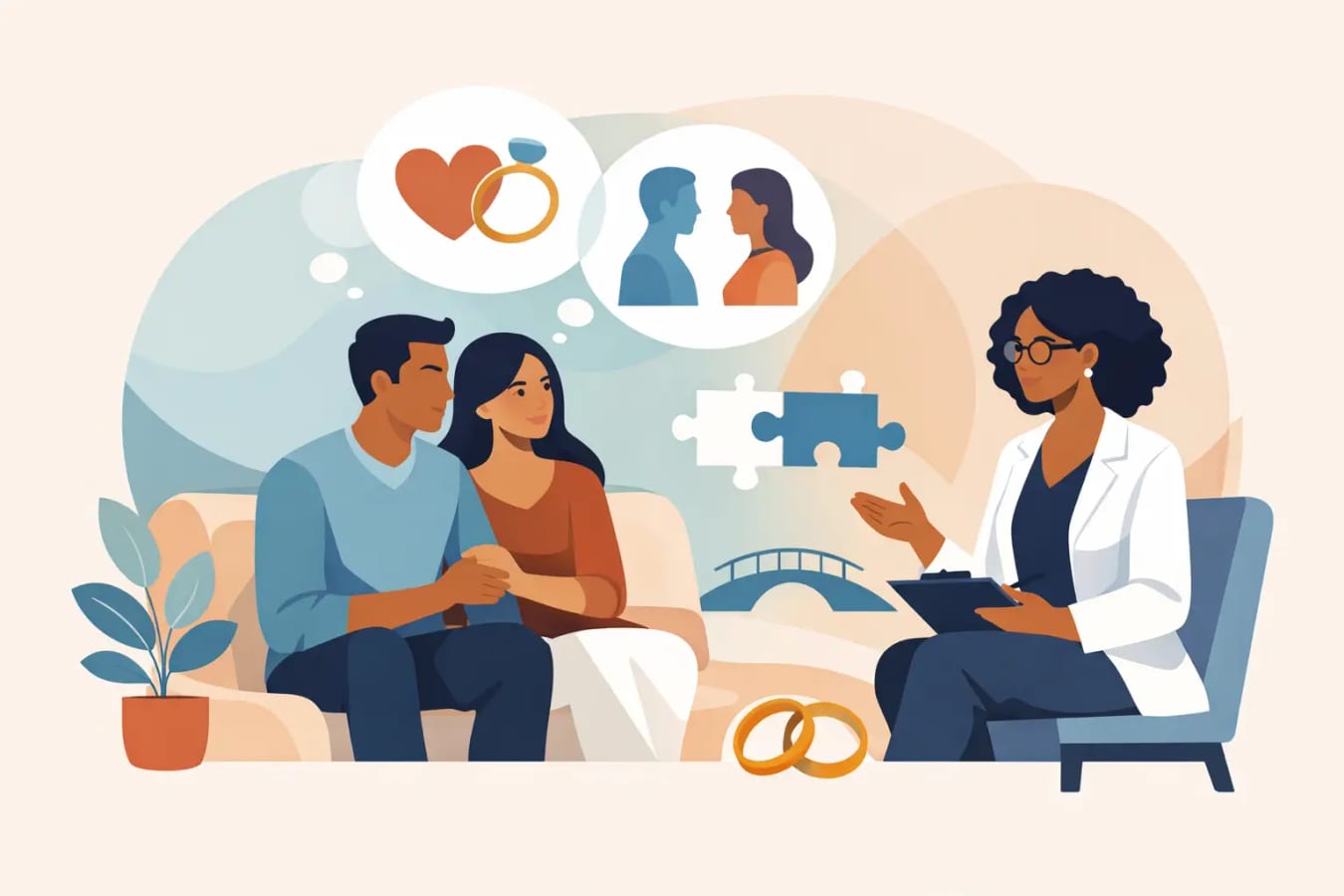
For many couples, premarital support is not about fixing a broken relationship. It is about caring for a meaningful one. Choosing counseling before marriage can be a practical, grounded step for people who want to understand each other better, prepare for challenges, and enter marriage with more clarity than assumptions.
What couple counseling before marriage is really for
A lot of people worry that seeking counseling means something must be wrong. In reality, many healthy couples start therapy because they want to be intentional. They know love matters, but love alone does not answer every real-life question about conflict, finances, intimacy, family boundaries, faith, parenting, or long-term goals.
Couple counseling before marriage creates space for those conversations with support from a trained professional. Instead of waiting until a painful pattern is entrenched, couples can learn how they each communicate, how they respond under stress, and what helps them feel respected and emotionally safe.
That process can be especially meaningful if one or both partners grew up around conflict, silence, instability, or relationships that did not model repair. Sometimes people carry unspoken fears into commitment. Sometimes they carry hope and excitement alongside uncertainty. Counseling makes room for all of it.
Why it helps even when things feel good
One of the most common reasons couples avoid premarital counseling is that they are getting along well. They assume support is for people in crisis. But counseling can be useful precisely because things are relatively stable. It is often easier to build skills when both people feel connected than when they are already overwhelmed.
You might use this time to talk through questions you have both touched on, but never fully explored. How will decisions get made? What happens if one person wants children and the other is unsure? How involved will extended family be? What does emotional support look like during a hard season? How do you each define partnership, loyalty, privacy, or forgiveness?
These conversations do not need to be dramatic to matter. In fact, many relationship injuries start small. One person assumes. The other avoids. Resentment grows quietly. Counseling helps couples notice those patterns early and respond with more honesty and care.
Common topics in counseling before marriage
Every couple brings a different story, and good counseling should honor that. There is no one script for what gets discussed. Still, a few themes come up often because they shape daily life in powerful ways.
Communication and conflict
Most couples do not need to stop disagreeing. They need better ways to disagree. Counseling can help you notice whether conflict becomes criticism, defensiveness, shutting down, or escalation. It can also help you practice repair - the ability to pause, listen, take responsibility, and reconnect after hurt.
This matters because conflict style often becomes more visible after marriage, especially when life gets busy or stressful. If you already know how to come back to each other after tension, you are not depending on chemistry alone to carry you through hard moments.
Money, work, and shared responsibility
Financial stress can put real pressure on a relationship, but money conversations are rarely just about math. They often touch security, power, generosity, fear, family history, and values. One partner may be a careful planner. The other may be more flexible. Neither approach is automatically wrong, but unspoken expectations can create friction.
Counseling can help couples talk about spending, debt, saving, income differences, career goals, and the practical work of running a household. It can also make room for conversations about fairness. That does not always mean a perfect 50-50 split. It means creating agreements both people understand and can live with.
Family, culture, and boundaries
Marriage joins more than two individuals. It often brings together family traditions, cultural values, spiritual beliefs, and different ideas about closeness or privacy. Sometimes those differences are enriching. Sometimes they are painful or confusing.
Premarital counseling offers space to ask questions like: How will holidays work? What role will parents play in decisions? What boundaries are needed to protect the relationship? How will we handle differences in religion, politics, or family expectations? Honest conversation here can prevent a lot of future hurt.
Intimacy and emotional safety
Physical intimacy and emotional closeness are connected, but not identical. Some couples talk openly about sex. Others avoid it because they feel embarrassed, unsure, or afraid of conflict. Counseling can provide a respectful space to discuss needs, expectations, comfort levels, past experiences, and concerns.
Emotional safety matters just as much. People tend to open up when they feel accepted rather than judged. Learning how each partner experiences affection, vulnerability, reassurance, and rejection can make the relationship feel steadier and more compassionate.
What if you are already noticing red flags?
Sometimes couple counseling before marriage brings up harder truths. That can feel unsettling, but it is not necessarily a bad sign. In some cases, counseling helps couples work through manageable issues with more maturity and commitment. In other cases, it reveals patterns that deserve serious attention before a wedding moves forward.
That might include repeated dishonesty, controlling behavior, contempt, unresolved substance use, intense volatility, or pressure that leaves one partner feeling small, afraid, or unable to speak freely. A good counselor will not push you toward marriage at all costs. The goal is not to protect the timeline. The goal is to support your well-being, dignity, and ability to make informed choices.
Sometimes the bravest outcome is moving ahead with clearer tools. Sometimes the bravest outcome is slowing down.
How to get the most out of couple counseling before marriage
The most helpful mindset is openness, not performance. You do not have to show up as the perfect couple. You do not need polished answers. Counseling works best when both people are willing to be honest about what feels strong, what feels tender, and what they do not yet know how to talk about well.
It also helps to let go of the idea that one session will settle everything. Some couples benefit from a short series of structured conversations. Others need more time, especially if there are old wounds, blended family concerns, trauma histories, or major value differences. It depends on the relationship and on what you are hoping to build together.
If one partner is more hesitant, that is common too. Therapy can feel vulnerable, especially for people who did not grow up talking openly about emotions. A respectful, inclusive counselor should help both partners feel heard rather than singled out or blamed.
Choosing the right counselor
Fit matters. You are trusting someone with very personal parts of your relationship, so it is reasonable to look for a counselor who feels grounded, affirming, and skilled in working with couples. You may want someone who understands your cultural background, faith tradition, identities, or the specific stressors you are navigating.
The best premarital counseling is not one-size-fits-all. It should reflect who you are, what matters to you, and what kind of marriage you want to create. For couples in Missouri who want either in-person or online support, practices like Counseling Group of the Ozarks may offer the kind of flexible, dignity-centered care that makes these conversations feel more approachable.
A stronger start, not a perfect one
Marriage does not require perfection before you begin. It does ask for honesty, humility, and a willingness to keep learning each other over time. Couple counseling before marriage can help you start from a place of greater understanding instead of hopeful guesswork.
If you are considering it, you do not need a dramatic reason to reach out. Wanting to protect something meaningful is reason enough. Giving your relationship time, attention, and support before marriage is not a sign of weakness. It is one way of saying, with care and intention, that this future matters to both of you.