Couples & relationships
Top Signs of Relationship Burnout to Notice
Published 6 min read

By the CGO Clinical Team
Licensed counselors and social workers in Springfield, MO · Meet the team
A relationship can look functional from the outside while feeling painfully empty on the inside. You may still share a home, coordinate schedules, or say “I love you,” yet feel as though every interaction takes more energy than you have. Recognizing the top signs of relationship burnout can help you name what is happening without blaming yourself or the person you love.
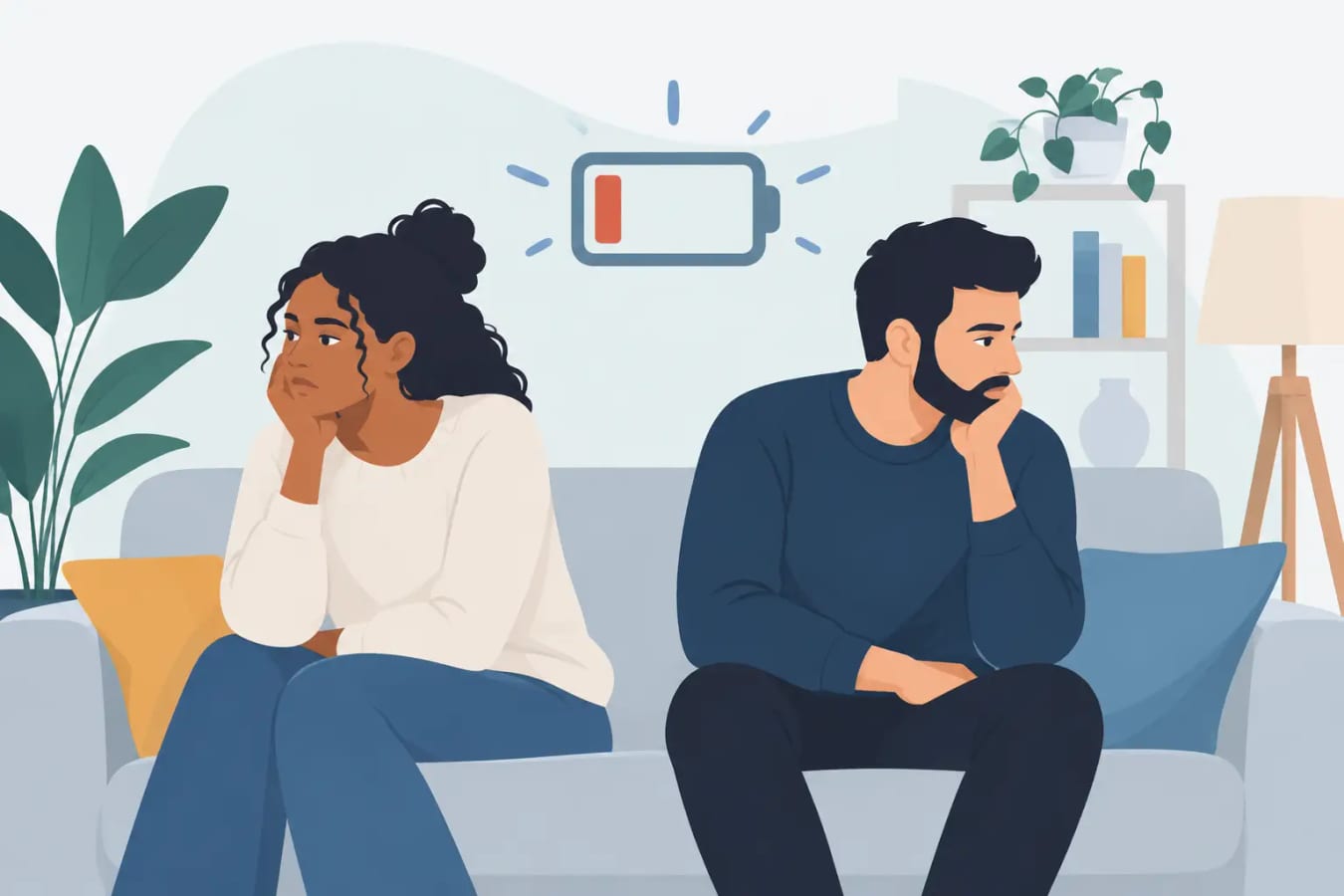
Relationship burnout does not automatically mean a relationship is over. It often means the way you have been coping together is no longer sustainable. Stress, unresolved hurt, caregiving, parenting, work demands, grief, mental health concerns, financial strain, and identity-related stress can all leave a relationship carrying more than it can comfortably hold.
What relationship burnout can feel like
Burnout in a relationship is a state of emotional exhaustion and disconnection. Instead of feeling able to bring your full self to the relationship, you may feel numb, guarded, resentful, or checked out. Small needs can feel overwhelming, and conversations that once felt ordinary may seem like another task on an already crowded list.
It is different from a difficult week or an occasional argument. Every close relationship has seasons of conflict, distance, and fatigue. Burnout tends to linger. The sense of depletion may follow you for weeks or months, even during moments that are supposed to feel restful or enjoyable.
You do not need to prove that your pain is serious enough before taking it seriously. Feeling worn down is information. It can be an invitation to slow down, get curious, and seek support before disconnection becomes the only way you know how to protect yourself.
Top signs of relationship burnout
You feel emotionally drained after time together
One of the clearest signs is regularly feeling depleted after interacting with your partner, rather than comforted, understood, or simply at ease. This does not mean every moment together should feel light. It does mean that if you consistently leave conversations feeling tense, lonely, or exhausted, something may need attention.
You may begin to conserve energy by keeping your thoughts to yourself. Perhaps you expect a disagreement, dismissal, or misunderstanding, so silence feels safer than trying to explain what you need.
You have stopped bringing up problems
At first, couples often argue because both people still want to be heard. When burnout sets in, conflict can shift into avoidance. You may think, “What is the point?” or decide that addressing an issue will take too much emotional work.
Avoiding conflict can create short-term peace, but it often allows hurt to collect beneath the surface. The issue may not be a lack of love. It may be that both people have lost confidence that hard conversations can lead anywhere helpful.
Affection and curiosity have faded
Physical intimacy may decrease during relationship burnout, but the change is often broader than sex. You may stop reaching for your partner’s hand, asking about their day, sharing humor, or noticing the small details of their life. They may feel less like a person you are connected to and more like someone you manage logistics with.
This can be especially confusing when you still care deeply. Love and emotional availability are not always available in equal amounts. A person can love their partner and still feel too overwhelmed to connect.
Minor issues trigger outsized reactions
A forgotten errand, a tone of voice, or dishes left in the sink may lead to anger that feels bigger than the moment. Often, the immediate disagreement is not the whole story. Repeated disappointments, unequal responsibilities, old injuries, or unmet needs may be sitting underneath it.
The goal is not to decide whose reaction is “too much.” It is to ask what the reaction might be protecting. Anger can sometimes be a signal of hurt, fear, loneliness, or a need for more support.
You feel more relief than sadness when plans change
If your partner cancels a date night or comes home late and your first feeling is relief, take notice. Wanting occasional time alone is healthy. Consistently feeling better when you do not have to engage can signal that the relationship has become associated with pressure rather than restoration.
This sign deserves gentleness, not shame. You may need space, clearer boundaries, a different division of labor, or help rebuilding emotional safety.
Resentment has become a regular companion
Resentment often grows when one person feels unseen, overburdened, or expected to keep giving without being cared for in return. It can show up as mental scorekeeping, sarcasm, irritability, or a quiet sense that your needs do not matter as much as everyone else’s.
Sometimes the imbalance is practical, such as carrying most household or parenting responsibilities. Sometimes it is emotional, such as being the one who always initiates repair or remembers what the other person is going through. Neither partner has to be a villain for an unhealthy pattern to be real.
You are fantasizing about escape, not repair
It is common to imagine a break from stress. Burnout may be present when your daydreams focus less on solving problems together and more on disappearing from the relationship altogether. You may picture living alone, staying constantly busy, or finding reasons not to come home.
These thoughts do not tell you exactly what decision to make. They do suggest that your current experience needs care. Before making a major choice, it can help to understand whether you are seeking distance from the relationship itself, from chronic conflict, or from exhaustion in other parts of life.
Why burnout happens to caring people
Relationship burnout is rarely caused by one bad conversation. More often, it develops through repeated patterns that go unaddressed: criticism replacing requests, defensiveness replacing listening, or busyness replacing intentional time together. Major life transitions can intensify those patterns, particularly when people are already stretched thin.
Individual well-being matters, too. Depression, anxiety, trauma, chronic illness, sleep loss, and burnout at work can affect the capacity to communicate and connect. That does not excuse harmful behavior, but it can provide useful context. A compassionate conversation about what is happening is often more productive than deciding that one person is simply the problem.
What can help when you feel disconnected
Start small and be specific. Rather than opening with every frustration you have stored away, try naming one present-tense experience: “I miss feeling close to you,” or “I am overwhelmed and I do not know how to talk about it without shutting down.” Use a calm moment if possible, not the middle of an argument.
It may also help to look honestly at the conditions around the relationship. Are responsibilities shared fairly? Is either person getting enough rest and support? Have you had time for meaningful connection that is not about chores, children, bills, or conflict? A weekly check-in can be useful when it is brief, respectful, and focused on understanding rather than winning.
Rebuilding connection requires participation from both people. You can communicate clearly, set boundaries, and invite repair, but you cannot do all the emotional work alone. If both partners are willing, couples counseling can offer a structured place to speak honestly, recognize unhelpful patterns, and practice new ways of responding.
Individual counseling can be valuable as well, especially if you are unsure what you feel, struggle to voice needs, or need space to make sense of your choices. Support is not only for people who have decided to stay or decided to leave. It can help you find clarity before either decision.
When burnout may be more than burnout
Relationship stress and abuse are not the same. If you are experiencing threats, intimidation, control over money or movement, humiliation, coercion, physical harm, or fear of your partner’s reaction, your safety comes first. Couples counseling is not always appropriate when abuse is present because honest communication can increase risk. Consider reaching out to a trusted support person, a domestic violence resource, or emergency services if you are in immediate danger.
You deserve a relationship where you can be yourself with dignity and safety. Whether you are feeling distant, angry, numb, uncertain, or hopeful, asking for help can be a brave and practical next step. At Counseling Group of the Ozarks, counseling is a space to be heard as a whole person and to consider what healing, boundaries, or reconnection could look like for you.