Couples & relationships
When Relationship Counseling Services Can Help
Published 6 min read

By the CGO Clinical Team
Licensed counselors and social workers in Springfield, MO · Meet the team
The argument may have started over dishes, money, a missed text, or something neither of you can fully name. But when the same hurt keeps returning, it can begin to feel like you are living beside someone you love rather than living with them. Relationship counseling services create room to slow that cycle down, understand what is happening beneath it, and decide what you need next.

Seeking help does not mean you have failed at your relationship. Often, it means you have recognized that your usual ways of coping, communicating, or repairing after conflict are no longer giving either person relief. That recognition takes honesty, and honesty is a meaningful place to begin.
What relationship counseling services can offer
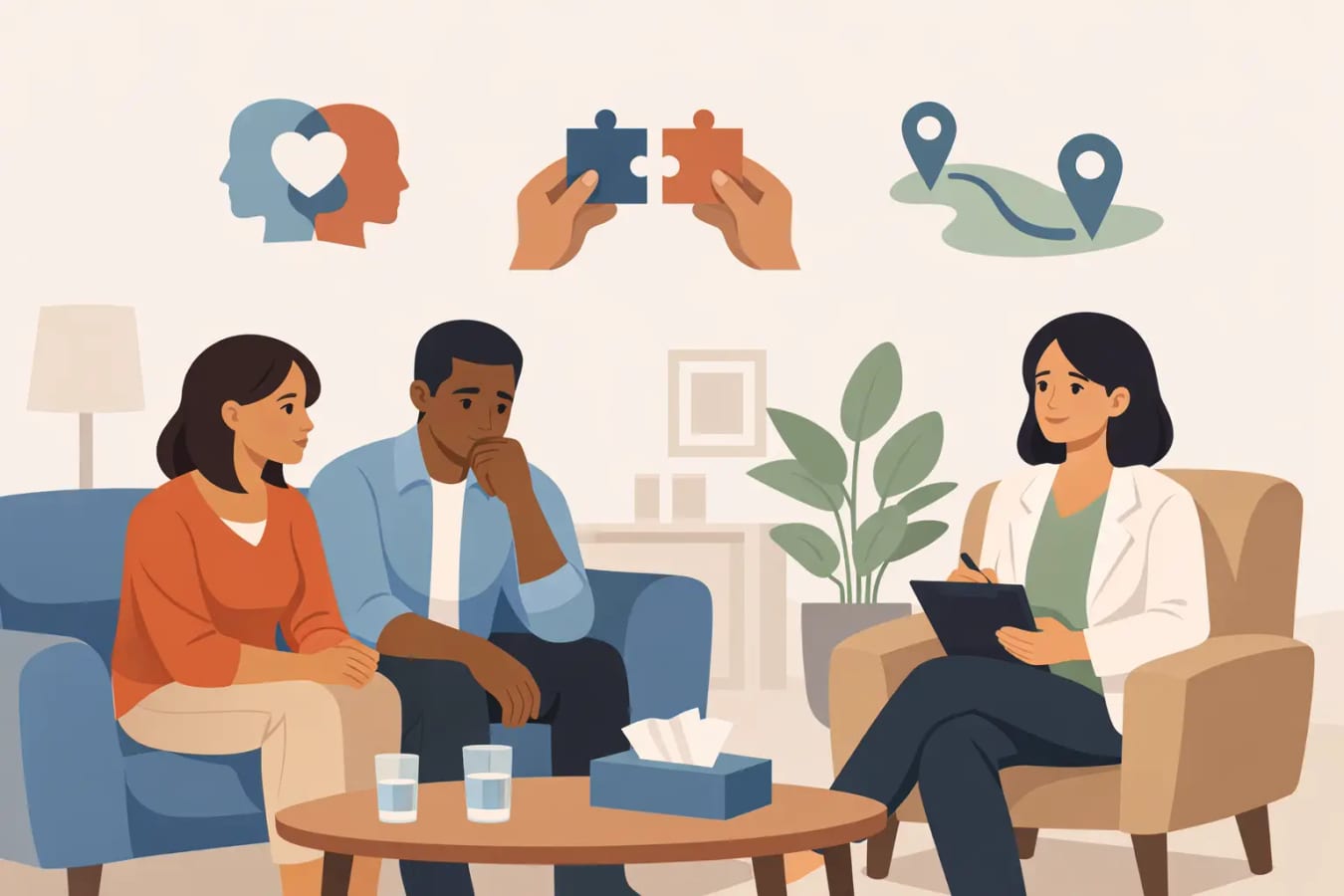
Relationship counseling is a form of therapy that helps people understand the patterns affecting their connection. It may involve romantic partners, married couples, people who are dating, co-parents, adult family members, or others whose relationship matters deeply to them. The goals are personal. Some people want to feel close again. Others want to communicate without escalating, rebuild trust after a rupture, make a difficult decision, or create healthier boundaries.
A counselor does not act as a judge who decides who is right. Instead, they help each person feel heard while bringing attention to the cycle that keeps causing pain. For example, one partner may criticize because they feel alone, while the other withdraws because they feel overwhelmed. Both may leave the conversation feeling rejected, even though each person is trying to protect something tender.
In counseling, that pattern can become visible. Once it is named, there is more room to respond differently.
The work is not limited to conflict
Many people wait until their relationship feels close to breaking before reaching out. Counseling can certainly support people during high-conflict seasons, but it can also help when things simply feel distant, tense, or stuck. You do not need a dramatic event to deserve support.
Sessions may focus on learning how to express needs clearly, listen without preparing a defense, repair after a painful conversation, or talk about subjects that have become difficult to raise. These can include parenting, intimacy, finances, substance use, grief, in-laws, changing roles, mental health concerns, or the pressure of major life transitions.
For some relationships, the most helpful outcome is renewed connection. For others, it is greater clarity and a more respectful way forward. Counseling does not require you to arrive with one predetermined answer.
Signs it may be time to seek support
Most relationships experience disagreement. The question is not whether conflict exists, but what happens during and after it. If the same issue returns with no real resolution, if conversations regularly become defensive or shut down, or if one or both people feel lonely in the relationship, counseling may offer a constructive next step.
It can also help when trust has been strained. A broken agreement, secrecy, infidelity, repeated disappointment, or a feeling that your partner no longer understands you can create deep uncertainty. Trust rarely returns because someone is told to “move on.” It is rebuilt through accountability, consistent behavior, and conversations that make room for the full impact of what happened.
Sometimes the concern is less obvious. You may still care for one another, share responsibilities, and get through the day, yet feel emotionally far apart. You may avoid certain topics because every attempt ends badly. You may be asking yourself whether the relationship can change, while feeling guilty for even wondering. These experiences are valid reasons to seek care.
What a first session can feel like
Starting therapy can feel vulnerable, especially if one person is more ready than the other. A first appointment is generally a time to share what has brought you in, what each person hopes will be different, and what has made change difficult so far. You do not have to explain your entire history perfectly or agree on every detail.
A thoughtful counselor will make space for more than one perspective. They may ask about the relationship’s strengths as well as its stressors, because the moments that still feel safe, warm, or meaningful can matter in the healing process. They may also ask about individual experiences that affect the relationship, such as anxiety, depression, past trauma, family expectations, identity-related stress, or changes in health.
Some people worry that the counselor will take sides. Good therapy is not about treating one person as the problem. It is about recognizing the impact each person has on the relationship while holding both people accountable for the behaviors they can change.
That said, fairness does not mean minimizing harm. If there has been betrayal, intimidation, repeated cruelty, or controlling behavior, counseling should address those realities directly rather than asking the hurt person to carry equal responsibility for them.
Choosing a counselor who feels safe
The relationship between you and your counselor matters. Look for someone who communicates with respect, understands the concerns you are bringing in, and makes it possible for each person to retain their dignity. You deserve care that honors your race, age, sexual orientation, gender identity, beliefs, financial circumstances, culture, and personal history.
It can be useful to ask practical questions before beginning. Consider whether the provider offers in-person or online sessions, whether appointment times fit your life, what fees or insurance options apply, and how they approach relationship work. Convenience cannot solve every challenge, but reducing barriers can make it easier to attend consistently.
It is also okay if the first counselor is not the right fit. You may need a provider whose style is more structured, more reflective, or more direct. Finding a comfortable fit is not being difficult. It is part of caring for yourself and the relationship seriously.
When joint counseling may not be the safest choice
Couples or relationship therapy is not appropriate in every situation. If there is violence, threats, coercion, stalking, severe control, or fear of retaliation for what is said in session, safety needs to come first. Joint sessions can sometimes increase risk when one person is using power or intimidation against the other.
In those circumstances, individual counseling, advocacy support, safety planning, or other specialized resources may be a better starting point. A caring professional can help assess what type of support protects your well-being. No one should be pressured to share vulnerable information in front of a person they fear.
Change happens between sessions, too
Counseling is not a place where someone gives you a script and your relationship suddenly becomes easy. Progress often comes through smaller, repeated choices: pausing before responding, naming an emotion instead of making an accusation, following through on an agreement, or returning to a hard conversation with more care.
There may be sessions that feel relieving and sessions that bring up grief, anger, or uncertainty. That does not necessarily mean therapy is failing. Meaningful change can require facing what has been avoided. What matters is whether the process remains respectful, emotionally safe, and connected to goals that matter to you.
At Counseling Group of the Ozarks, relationship support is grounded in the belief that every person deserves to be seen as a whole human being, not reduced to a conflict, a diagnosis, or a difficult moment. In-office care in Springfield, Missouri, and online counseling options can provide flexibility when taking that first step feels hard.
You do not have to wait for one more painful argument to give your relationship attention. Whether you are hoping to reconnect, communicate with more care, or understand what comes next, asking for support can be a brave and practical act of respect for yourself and the people you love.