
Couples & relationships
Your Guide to Couples Therapy Expectations
Published 6 min read

By the CGO Clinical Team
Licensed counselors and social workers in Springfield, MO · Meet the team
The conversation that brings a couple to therapy is often not dramatic. It may happen after the same argument has repeated for months, after a quiet distance has settled in, or after one partner says, “I do not know how to keep doing this.” A guide to couples therapy expectations can make that first step feel less intimidating. Therapy is not a test of whether your relationship is worth saving. It is a structured, supportive place to understand what is happening between you and decide what needs to change.
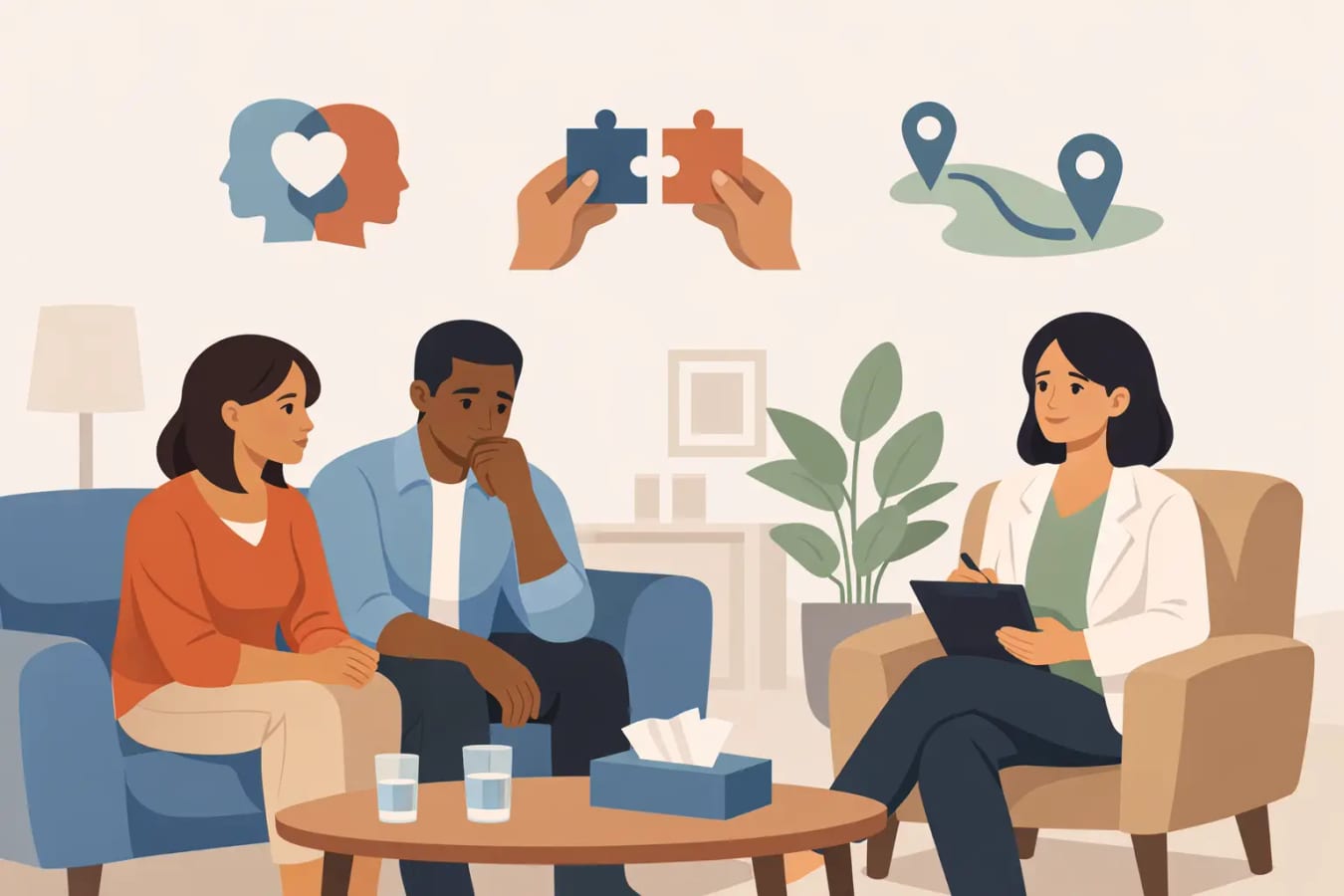
Choosing counseling can take courage, especially when there is hurt, uncertainty, or fear of being blamed. A skilled couples therapist works to create emotional safety for both people while staying honest about the patterns that may be causing harm.
What to Expect From Couples Therapy
Couples therapy is not usually a place where a therapist declares who is right. Instead, the therapist listens for the cycle the two of you get caught in. One person may pursue conversation when they feel disconnected, while the other pulls away because they feel overwhelmed or criticized. Both people can leave the interaction feeling alone, even when each is trying to protect the relationship in their own way.
Early sessions often focus on understanding your relationship history, current concerns, strengths, stressors, and hopes for counseling. Your therapist may ask how you met, what once felt meaningful between you, when the struggle began, and what happens during conflict. They may also ask about family experiences, mental health, substance use, parenting, finances, identity, and major life changes. These questions are not meant to reduce either person to a problem. They help build a fuller picture of the relationship and the people in it.
You can expect thoughtful questions, careful listening, and support in naming feelings that may be difficult to say out loud. You may also be asked to slow down. Couples often arrive ready to explain every detail of the latest disagreement, but therapy may look beneath that event to find the fear, longing, grief, or unmet need underneath it.
At times, a session may feel relieving. At other times, it may feel vulnerable or emotionally tiring. Bringing long-held concerns into the open can create discomfort before it creates clarity. That does not automatically mean therapy is going badly. It does mean that both partners deserve a pace that feels respectful and manageable.
Your therapist will not take sides
Fairness does not mean treating every behavior as equally helpful or harmless. A therapist may gently challenge blaming, contempt, avoidance, dishonesty, or communication that causes pain. Still, the goal is not to build a case against one partner. It is to understand responsibility clearly and help each person practice different choices.
Good couples therapy makes room for each person’s dignity. Your background, culture, faith, sexual orientation, gender identity, relationship structure, financial circumstances, and personal values should be met with respect. Your goals may involve rebuilding closeness, improving co-parenting, deciding whether to stay together, or finding a healthier way to separate. Therapy can support many paths, not just one definition of a successful relationship.
Sessions are collaborative, not scripted
Some therapists teach communication skills directly. Others focus more on emotional patterns, attachment, trauma, or the practical habits that shape daily life. Many use a combination. Your therapist may invite you to practice listening without interrupting, describe an emotion without accusation, or make a clear request rather than hoping your partner will guess what you need.
You may receive an exercise to try between sessions, such as setting aside 15 minutes for a check-in or noticing what happens in your body before an argument escalates. These practices are not homework meant to earn approval. They are opportunities to carry new skills into real life, where change matters most.
Guide to Couples Therapy Expectations for the First Visits
The first few appointments are usually about assessment and trust. Some therapists meet with both partners together for every session. Others may schedule an individual meeting with each partner, particularly at the beginning. Ask how your therapist handles individual conversations and whether they have a policy about keeping secrets that affect the relationship. Policies differ, and knowing the approach early can prevent confusion later.
It is also reasonable to ask practical questions. How often will we meet? How will we know whether therapy is helping? What happens if one of us needs to attend online? How are fees, insurance, cancellations, and confidentiality handled? Clear information supports a stronger working relationship.
Confidentiality is an essential part of counseling, with legal and ethical limits related to immediate safety concerns, abuse of a child or vulnerable adult, or court orders. Your therapist can explain those limits in plain language. If you are receiving telehealth services, choose a private location when possible, use headphones if needed, and let your therapist know if privacy at home is difficult.
It can help to arrive with a shared question: “What would feel different in our relationship if counseling were useful?” Your answers may not match at first. One partner may want more affection, while the other wants fewer explosive arguments. Both answers can be a starting point.
Progress Is Usually Uneven
Many couples hope that one meaningful session will end years of tension. A breakthrough can happen, but lasting change often takes repetition. You are learning to respond differently in the very moments when old habits feel most automatic.
Progress may show up in small but meaningful ways. Perhaps an argument ends sooner. Maybe one partner says, “I need a break, but I will come back,” instead of shutting down completely. You may become more able to recognize the difference between your partner’s intention and the impact of their words. These shifts can make room for trust to grow.
There are trade-offs to consider. Therapy asks for time, financial resources, emotional energy, and a willingness to hear things you may not want to hear. It also cannot make someone participate honestly or change against their will. If one person is unsure about the relationship, counseling can still be useful, but the work may focus first on clarity, honesty, and respectful decision-making rather than immediate reconnection.
The fit with a therapist matters, too. You should feel respected, understood, and able to raise concerns. Feeling challenged is not the same as feeling dismissed. If something in therapy does not feel right, bringing it up can be part of the work. Sometimes a conversation about the therapeutic relationship leads to a better path forward; sometimes another clinician may be a better match.
When Couples Therapy Needs a Different Approach
Couples counseling is not appropriate for every situation, at least not as the first step. If there is fear, intimidation, coercive control, ongoing violence, or concern that speaking honestly could lead to retaliation, safety must come first. In these circumstances, individual support and a personalized safety plan may be more appropriate than joint sessions.
Active addiction, untreated severe mental health symptoms, or repeated betrayal can also affect the pace and structure of treatment. These concerns do not mean help is out of reach. They may mean that individual counseling, recovery support, medical care, or clear accountability needs to happen alongside or before couples work.
How to Prepare Without Trying to Be Perfect
Before your first session, try to identify one or two concerns you most want help with. Avoid building a detailed prosecution of your partner. Instead, consider the moments when you feel most disconnected and what you miss about feeling close.
Come willing to speak from your own experience. “I feel shut out when we stop talking for days” will usually open more conversation than “You never care.” If you become overwhelmed, say so. A pause, a breath, or a request to slow down can be more productive than pushing through until the conversation becomes hurtful.
Most of all, let therapy be a place where you do not have to perform certainty. You can arrive angry, hopeful, skeptical, grieving, or unsure whether you belong there. Beginning with honesty, even a small amount of it, is a brave and meaningful way to make room for what comes next.