Couples & relationships
How to Find Couple Counseling Near Me
Published 6 min read

By the CGO Clinical Team
Licensed counselors and social workers in Springfield, MO · Meet the team
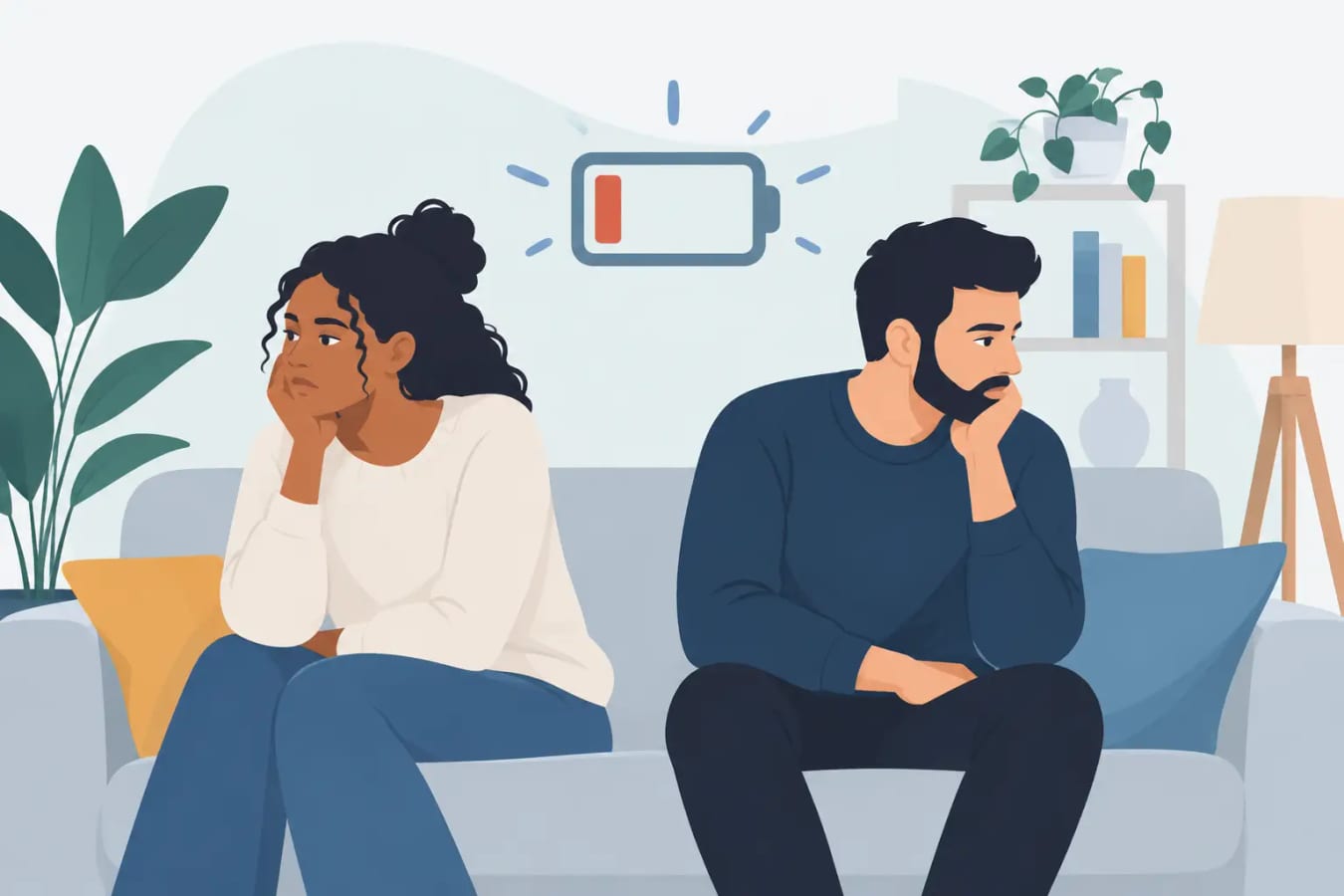
Typing couple counseling near me into a search bar often happens after a hard night - the same argument again, a silence that feels heavier than it should, or the growing fear that something important is slipping away. If that is where you are, it makes sense to want help quickly. It also makes sense to feel unsure about where to start.

Finding the right couples therapist is not just about picking the closest office. It is about finding a space where both people can feel heard, respected, and safe enough to be honest. That matters because relationship counseling works best when the process fits the people in the room, not just the problem they want to solve.
What couple counseling near me should actually help with
Many couples wait too long because they assume counseling is only for relationships in crisis. Sometimes it is crisis care. More often, it is support for patterns that have become painful, confusing, or exhausting.
Couples therapy can help when communication keeps breaking down, conflict escalates too fast, trust has been damaged, intimacy feels distant, parenting stress is affecting the relationship, or one major life change has thrown everything off balance. It can also help when nothing looks dramatic from the outside, but one or both partners feel lonely inside the relationship.
That last part matters. You do not need a dramatic reason to ask for support. If the relationship feels stuck, strained, or harder than it used to, that is reason enough.
How to tell if a counselor is a good fit
Credentials matter, but fit matters too. A therapist can be experienced and still not feel like the right person for your relationship. When you are choosing care, it is reasonable to pay attention to both skill and comfort.
Start with practical questions. Does the therapist work specifically with couples, not just individuals? Do they explain their approach in a way that makes sense to you? Are they clear about fees, insurance, scheduling, and whether they offer in-person or online sessions?
Then pay attention to the emotional side. A good couples therapist should not make one partner the problem. They should not shame either of you, take sides too quickly, or push a one-size-fits-all idea of what a healthy relationship should look like. Good counseling makes room for your values, your history, your identities, and your goals.
If you are part of an LGBTQ+ relationship, an interracial relationship, a faith-based relationship, or a partnership shaped by cultural differences, that sensitivity is not a bonus. It is part of competent care. You should not have to spend your sessions teaching your therapist how to respect your life.
Questions to ask when searching for couple counseling near me
Before booking, it helps to ask a few direct questions. You are not being difficult. You are making an informed decision.
You might ask how the therapist handles high-conflict couples, whether they have experience with infidelity recovery, how they support couples with trauma histories, or whether they meet with partners individually at any point in the process. You can also ask what progress usually looks like and how they help couples when one person is more hesitant than the other.
The answers should feel thoughtful, not rehearsed. Therapy is not predictable in a neat way, so be cautious of anyone who promises fast fixes or guarantees a specific outcome. Some couples need a short stretch of focused work. Others need more time because the issues are layered. Honest therapists make room for that complexity.
In-person or online counseling
For some couples, location is the deciding factor. For others, flexibility matters more. That is why it can help to widen the search beyond the nearest office and consider telehealth too.
In-person counseling can feel grounding. It gives you a neutral space away from the house, the kids, the chores, and the unfinished argument in the kitchen. Some couples find it easier to stay present when they are physically in the room with a therapist.
Online counseling can remove barriers that would otherwise delay care. It may be easier to schedule around work, parenting, transportation, or health needs. It can also be a strong option if you live in Missouri but do not want your choices limited to the few offices closest to home.
There is no universally better format. What matters is whether you can attend consistently and engage honestly. The best therapy model is often the one you can realistically keep showing up for.
What the first session usually feels like
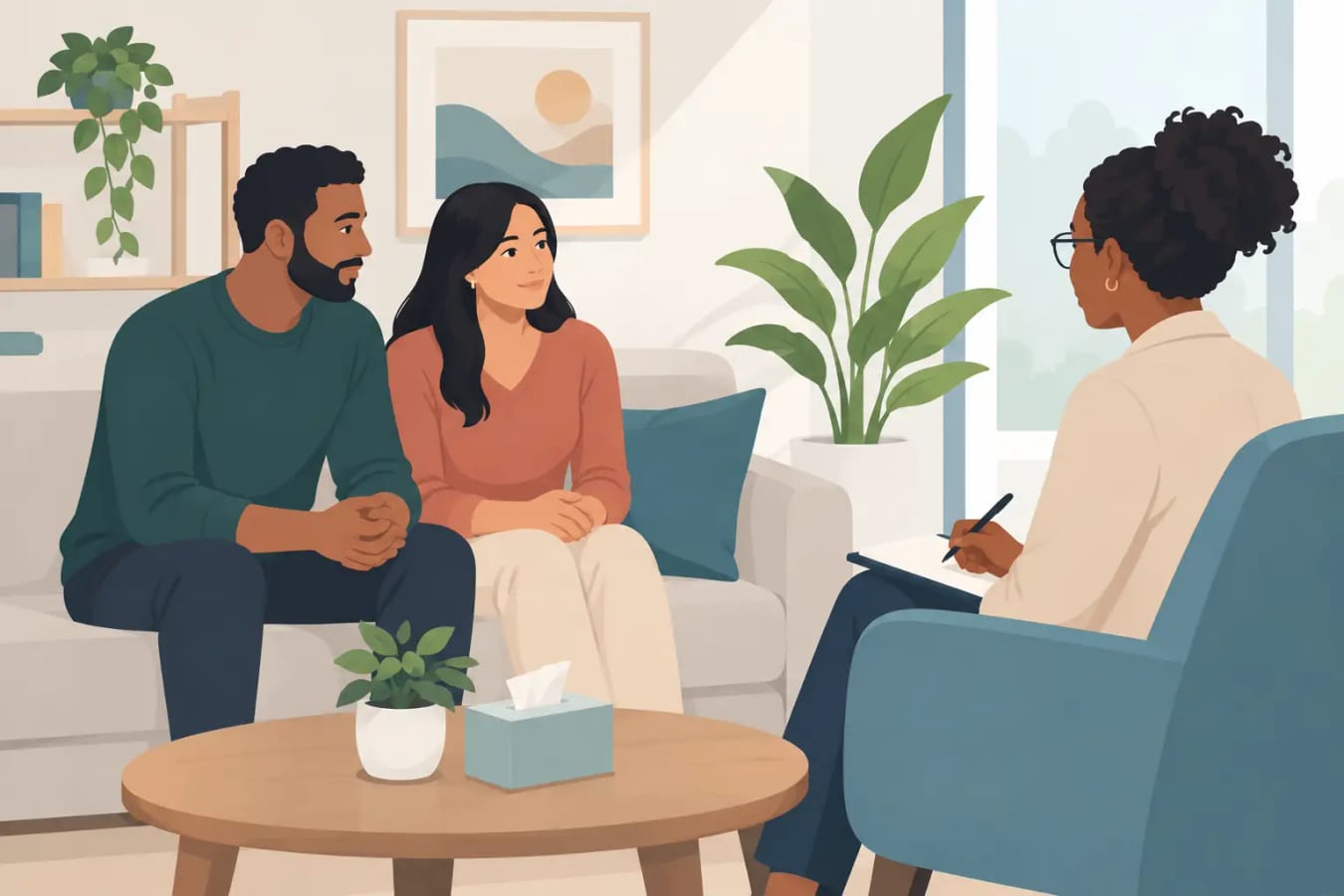
A lot of people worry that the first session will turn into a replay of their worst fight, with a therapist acting like a referee. Good couples counseling usually feels more structured and more supportive than that.
The first session often focuses on understanding the relationship history, the current concerns, and what each partner hopes will change. You may be asked about communication patterns, stressors, important life events, and what has already been tried. The goal is not to decide who is right. The goal is to understand the cycle the two of you are stuck in.
Sometimes one partner is ready and the other is skeptical. That is common. A good therapist knows how to work with mixed levels of motivation without pressuring or shaming either person. Caution does not mean someone does not care. Sometimes it just means they are tired, hurt, or afraid this will become another place where they feel blamed.
Signs therapy is helping
Progress in couples counseling is not always dramatic. In fact, early progress can look surprisingly ordinary.
It may mean arguments end sooner. It may mean one of you pauses before saying the sharp thing. It may mean you start recognizing the pattern underneath the conflict - pursuit and withdrawal, criticism and defensiveness, silence and resentment - before it takes over the whole evening.
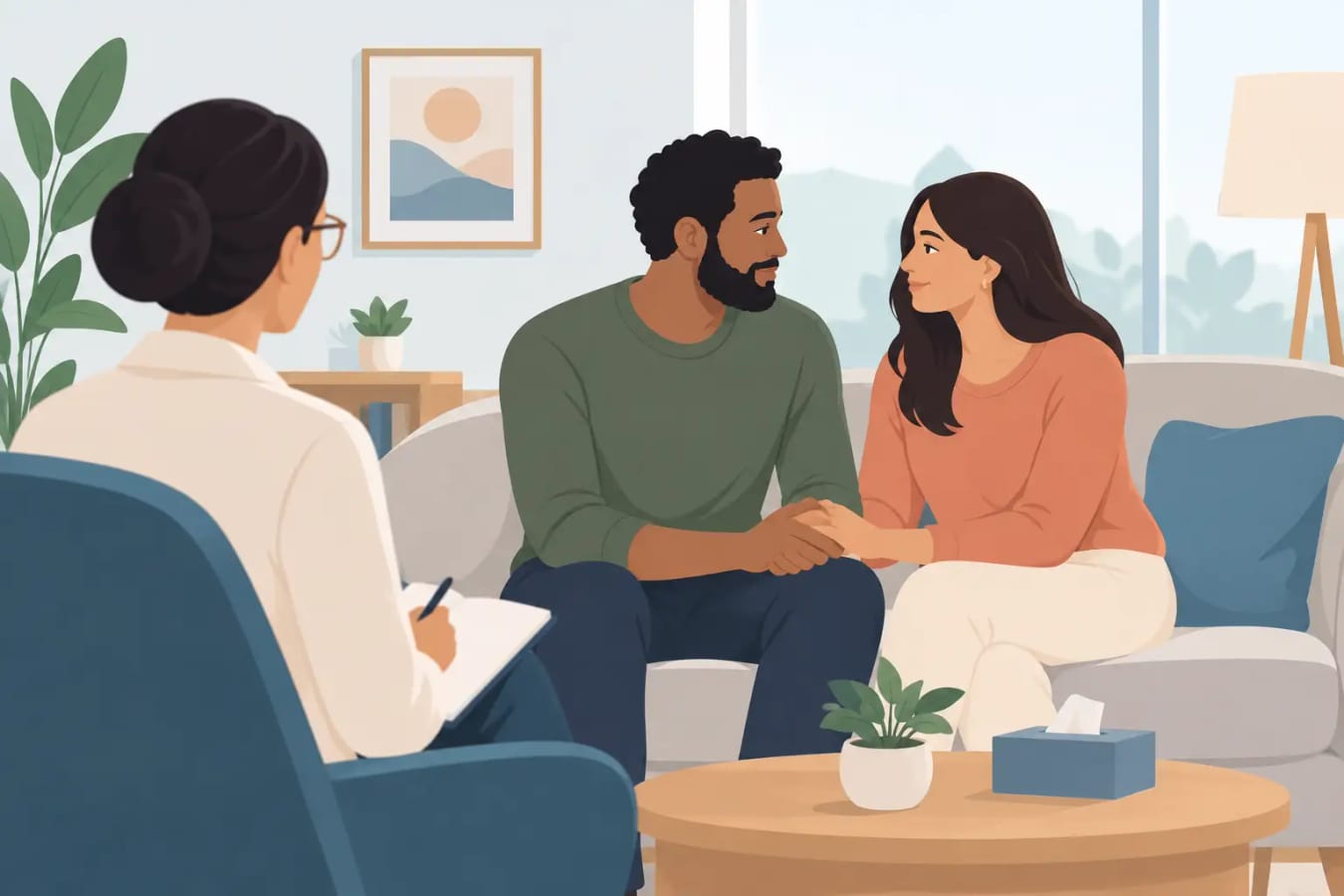
As therapy continues, many couples start to feel more curious and less reactive. Repair gets easier. Hard conversations become possible without as much fear. In some cases, counseling also helps partners make clear, compassionate decisions about the future of the relationship. Healing is not always the same as staying together. Sometimes it means understanding what is healthiest and most respectful for both people.
When one partner is not sure about counseling
This is one of the most common obstacles, and it can feel discouraging. If your partner is hesitant, try to frame counseling as support rather than punishment. The goal is not to prove a point. It is to understand what is happening between you and whether things can improve with help.
It also helps to be specific. Instead of saying, We need therapy because everything is broken, you might say, We keep having the same painful conversation and I do not want us to stay stuck there. That lowers defensiveness and makes the purpose clearer.
If your partner still says no, individual therapy can still be a meaningful next step. Relationship patterns do not live in one person alone, but your own support can help you respond with more clarity, steadiness, and self-respect while you decide what comes next.
Choosing care that feels safe
The best couples therapy is not just technically skilled. It is emotionally safe. That means both people are treated with dignity, the therapist makes room for difference, and the process feels grounded rather than performative.
If you are beginning this search, trust yourself enough to look for more than availability. Look for a counselor who respects your identities, listens for the deeper story beneath the conflict, and offers a steady place to do difficult work. Practices like Counseling Group of the Ozarks often focus on that kind of client-centered care, with options for in-office and online support.
Relationships are deeply personal. The help you choose should feel personal too.
If you are searching for couple counseling near me, you do not need to have the perfect words, a fully mutual plan, or a complete understanding of what went wrong. You only need a willingness to take the next honest step toward support.