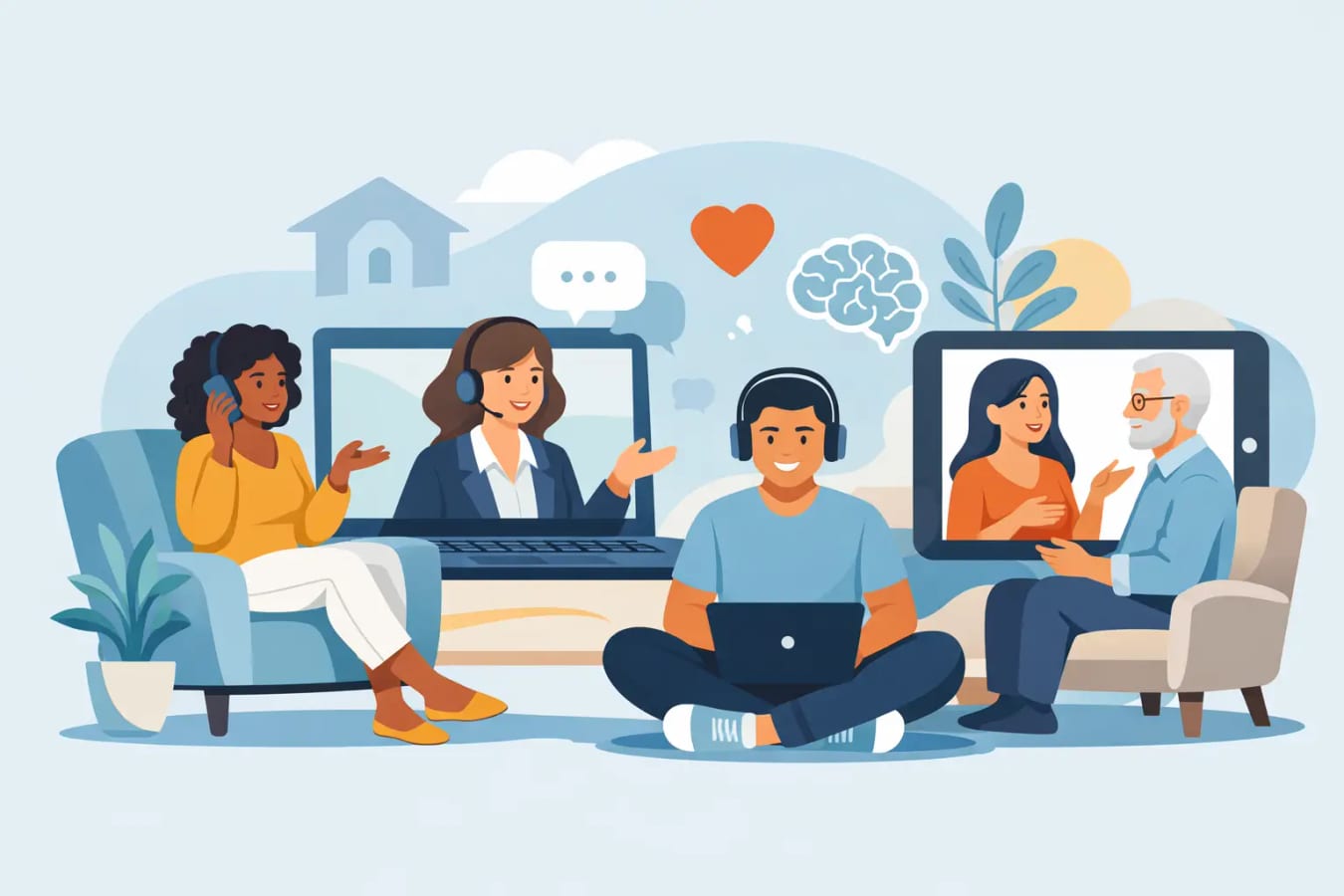
Online counseling
Online Therapy Versus In Person Care
Published 6 min read

By the CGO Clinical Team
Licensed counselors and social workers in Springfield, MO · Meet the team
Some people know they need support but get stuck on one question before they ever schedule a session: online therapy versus in person - which one will actually feel right? That question makes sense. Therapy works best when you feel safe enough to be honest, and the setting can shape how easy that is.
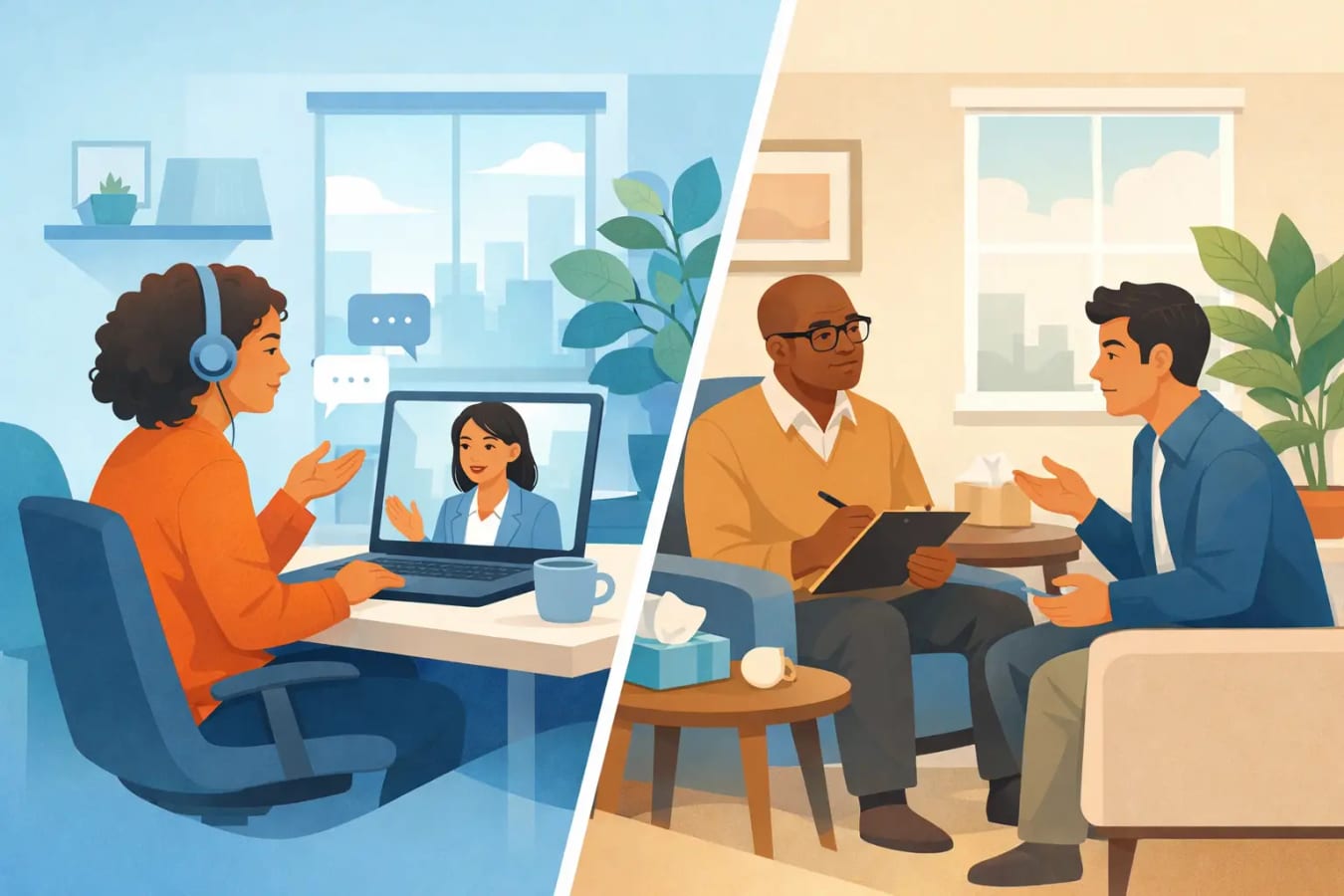
The good news is that there is no morally better option and no gold star for choosing the harder one. For many people, both formats can be effective. What matters most is finding a way to begin and a space where you can show up as yourself.
Online therapy versus in person: what really changes?
At the core, therapy is still therapy. You are meeting with a trained professional to explore what is hurting, what feels stuck, and what healing might look like in your life. Whether you sit on a couch in an office or log in from your car during lunch, the relationship, the quality of care, and the consistency of the work matter most.
Still, the format changes the experience in meaningful ways. In-person therapy offers a shared physical space. That can create a stronger sense of separation from everyday stress. You leave your house, arrive somewhere intentional, and have a room that is set aside for your care.
Online therapy offers flexibility that many people need. It can remove barriers like commuting, childcare logistics, mobility challenges, tight schedules, or living far from a therapist who feels like a good fit. For some clients, that convenience is not just helpful. It is the reason therapy becomes possible at all.
Neither option is automatically more serious, more effective, or more personal. The better question is often this: where are you most likely to feel comfortable enough to keep coming back and telling the truth?
When online therapy may feel like the better fit
Online counseling can be a relief for people whose lives already feel stretched thin. If getting to an office means arranging transportation, taking extra time off work, or finding someone to watch the kids, telehealth may lower the barrier enough to make regular care realistic.
It can also feel more comfortable for people who are anxious about walking into a waiting room or sitting face to face with someone new. Being in your own environment may help you settle faster and speak more freely. This is especially true for some first-time therapy clients, teens, and people who feel overwhelmed by unfamiliar settings.
Online therapy can also widen your choices. If you are in Missouri and looking for a therapist who understands your concerns, values, or identity, telehealth may allow you to connect with someone who is a stronger match than the closest office down the street.
That said, online therapy is not always easier in practice. Privacy can be a real issue if you live with family, roommates, or a partner and do not have a quiet place to talk. Internet problems, distractions, and screen fatigue can get in the way. Some people also find it harder to feel emotionally present through a screen, especially when discussing painful experiences.
When in-person therapy may feel more grounding
There is something powerful about being in a room designed for care. For some people, in-person therapy offers structure that helps them focus. The drive there can become a transition into reflection, and the drive home can offer a little breathing room before returning to work, parenting, or daily responsibilities.
In-person sessions may also feel more connected for clients who pay close attention to body language, eye contact, and subtle shifts in tone. While video sessions still allow for meaningful connection, some people feel more seen and more settled when they are physically present with their therapist.
This format can also be helpful when home does not feel private, calm, or emotionally safe. If your environment is full of interruptions or tension, leaving that space may make it easier to speak openly. For some clients, the office becomes one of the few places where they can exhale.
Of course, in-person therapy has trade-offs too. Commutes can be tiring. Appointment times may need to account for traffic, work schedules, or school pickup. If physical health, transportation, or distance make travel difficult, the effort required can create another obstacle when you are already struggling.
Effectiveness is not one-size-fits-all
Research has shown that online therapy can be effective for many concerns, including anxiety, depression, stress, relationship challenges, and life transitions. In-person therapy is also highly effective. The format itself usually is not the whole story.
What often matters more is fit. Do you feel respected by your therapist? Do you feel emotionally safe? Can you attend consistently? Are you able to focus enough to engage in the work? A great therapist in the wrong format for your life may not help as much as a good therapist in a format you can actually sustain.
There are also situations where one option may be preferable. Some clients with severe symptoms, high safety concerns, or needs that require close observation may benefit more from in-person care, or from a higher level of support altogether. A therapist can help assess that with you. Choosing a format is not a test of commitment. It is part of building care that is workable and responsible.
How to decide between online therapy versus in person
If you feel torn, start with your real life rather than the version of you that has endless energy and ideal habits. Ask yourself where therapy is most likely to happen consistently.
If you are juggling work, parenting, school, caregiving, or chronic exhaustion, online sessions may protect your ability to stay engaged. If your house is chaotic, your privacy is limited, or you know you focus better outside the home, in-person may be worth the extra effort.
It can also help to think about what helps you open up. Some people speak more honestly when they are in familiar surroundings. Others need the emotional boundary of a therapist's office to access vulnerable feelings. If you have done therapy before, consider what helped or what got in the way.
You do not need perfect certainty before you begin. Many people discover their preference only after trying one option. Sometimes the best starting point is simply the format that feels least overwhelming right now.
It is okay if your needs change
One of the most compassionate things you can do for yourself is allow flexibility. The best format for therapy may change depending on the season of life you are in.
You might start online because leaving the house feels impossible, then later decide that in-person sessions help you go deeper. Or you may begin in office, then switch to virtual appointments when work becomes demanding or transportation gets complicated. Change does not mean you are doing therapy wrong. It means you are paying attention to what supports you.
For couples and families, this flexibility can be especially valuable. Coordinating multiple schedules is hard enough without adding unnecessary barriers. Sometimes the format that allows everyone to show up is the one that protects the work.
Practices like Counseling Group of the Ozarks often offer both in-office and online options because people are not all living the same life, carrying the same stress, or healing in the same way. Good care makes room for that.
What matters most is feeling safe enough to begin
If you have been delaying therapy because you are trying to choose the perfect format, you are not alone. It is common to want reassurance before taking a vulnerable step. But the choice does not have to be permanent, and it does not have to be perfect.
Online therapy versus in person is really a question about access, comfort, and connection. The right answer is the one that helps you feel seen, respected, and able to return for the next session. When life has felt heavy for a while and your usual ways of coping are not enough, beginning matters more than getting every detail exactly right.
You deserve support that meets you where you are, honors your dignity, and gives you room to heal at your own pace. If one format makes that feel more possible, that is a very good place to start.