Online counseling
Is Online Counseling Effective for Anxiety?
Published 6 min read

By the CGO Clinical Team
Licensed counselors and social workers in Springfield, MO · Meet the team
Anxiety can make even small tasks feel crowded with risk: driving across town, sitting in a waiting room, finding child care, or explaining why you need an appointment. If you have wondered, is online counseling effective for anxiety, the short answer is yes, it can be. For many people, virtual therapy offers meaningful support, practical skills, and a consistent relationship with a counselor from a setting that feels more manageable.

Still, effective care is personal. Online counseling is not automatically the right fit for every person or every situation. The quality of the therapeutic relationship, your needs, your privacy, and the kind of support available all matter.
How online counseling can help with anxiety
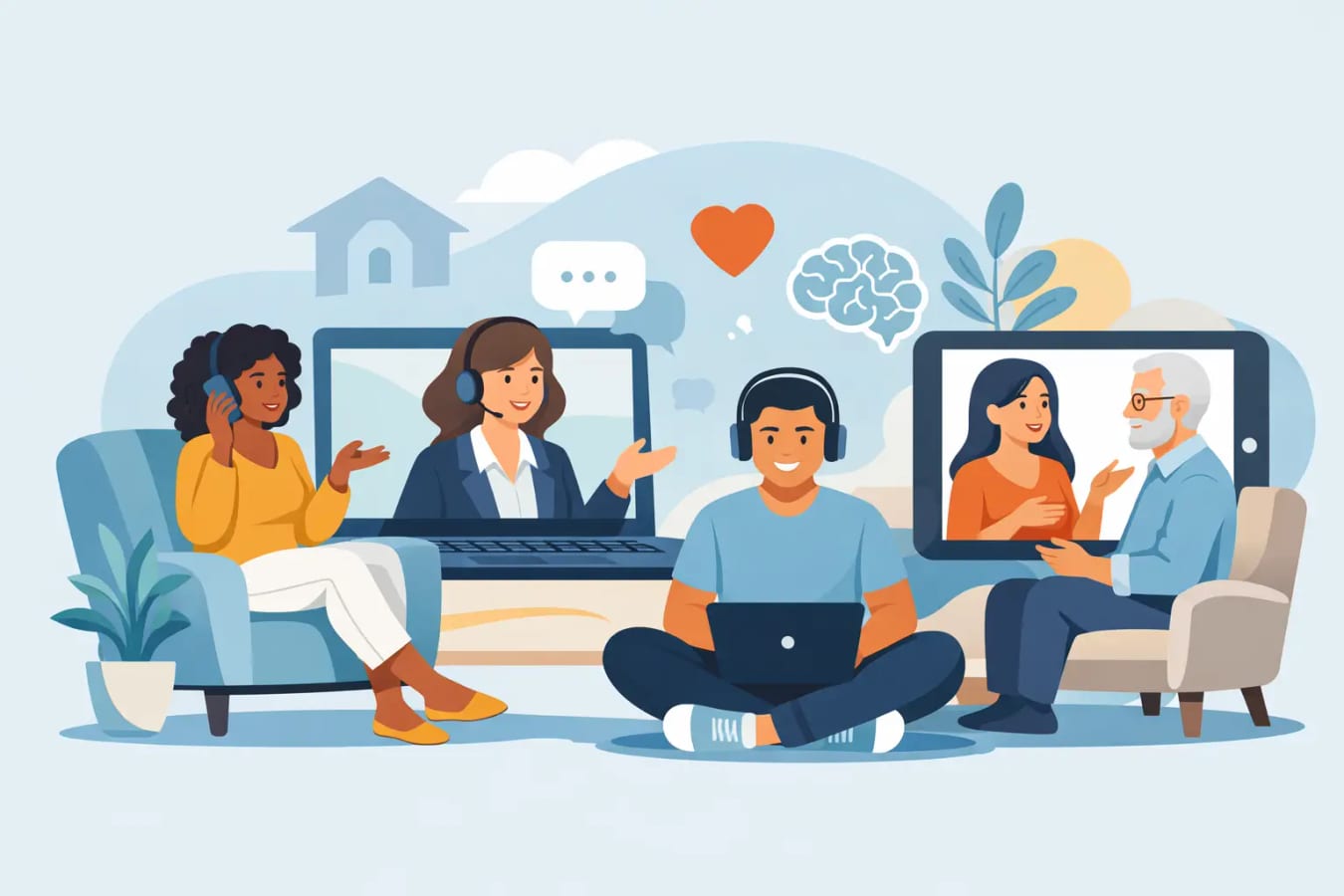
Online counseling, also called telehealth or virtual therapy, lets you meet with a licensed counselor through a secure video platform. The conversation may look much like an in-office session. You and your counselor can talk about what anxiety feels like in your body and daily life, identify patterns that keep it going, and practice new ways to respond.
Anxiety often grows when life starts getting smaller. You may avoid situations, replay conversations, seek constant reassurance, or stay alert for problems that have not happened. These responses can bring short-term relief while making anxiety feel more powerful over time. Counseling creates room to understand those patterns without judgment.
A counselor may help you build skills for calming your nervous system, challenging fearful thoughts, setting boundaries, tolerating uncertainty, or gradually facing situations you have been avoiding. Depending on your goals, therapy may also explore grief, relationship stress, work pressure, trauma, identity-related stress, family experiences, or other concerns connected to your anxiety.
For many clients, having this support from home makes it easier to begin. You do not have to prove that your struggle is serious enough before reaching out. If your usual ways of coping are no longer working, that is reason enough to seek care.
Is online counseling effective for anxiety in practice?
Research has found that telehealth therapy can be effective for many common mental health concerns, including anxiety. Approaches often used for anxiety, such as cognitive behavioral therapy, can translate well to a video setting when they are provided by a qualified clinician and the client has a private place to participate.
But evidence is only one part of the answer. Therapy works best when you feel safe enough to be honest and when your counselor understands what matters to you. Feeling respected, listened to, and treated as a whole person is not an extra. It is part of the work.
Virtual sessions can also make consistency more realistic. A person with a demanding job, limited transportation, mobility concerns, caregiving responsibilities, or social anxiety may be more likely to keep appointments when they do not need to travel. Regular attendance gives counseling time to build trust and momentum.
Online therapy is not meant to be less personal because it happens through a screen. Some people are surprised by how connected they feel after a few sessions. Others need time to adjust. A caring counselor can talk with you about what would help the space feel more comfortable and whether virtual care is meeting your needs.
When virtual therapy may be an especially good fit
Telehealth can be a strong option if you want more flexibility without giving up thoughtful, individualized care. It may be especially helpful when leaving home feels difficult, your schedule is unpredictable, or you live far from a counselor who feels like a good fit.
For someone with anxiety, the first step of entering a new office can itself feel overwhelming. Meeting from a familiar room may lower that barrier. It can allow you to put your energy toward the conversation rather than the logistics of getting there.
Online counseling can also make care more accessible for people in smaller Missouri communities or clients whose identities, beliefs, or life experiences make finding an affirming provider nearby more difficult. You deserve counseling that honors your background and goals rather than asking you to minimize parts of yourself to be understood.
There is another practical benefit: therapy skills can be practiced where life actually happens. If your counselor helps you develop a grounding routine, a plan for difficult mornings, or a way to respond to spiraling thoughts, you are already in the environment where you may use it. That can make the tools feel more usable between sessions.
What online counseling cannot solve on its own
Convenience is valuable, but it is not the same as fit. Some people prefer the physical separation of an office, where they can leave daily responsibilities outside the room for an hour. Others find it difficult to open up on video or feel distracted by home, work, family members, or notifications.
Privacy deserves careful attention. Before a session, consider whether you have a room where others cannot hear you, headphones if needed, and a reliable internet connection. You do not need a perfect setup, but you do need enough privacy to speak freely. If that is not possible, in-office counseling may offer a better container for the work.
Online care may also be insufficient when someone is in immediate danger, unable to stay safe, or needs a higher level of support than outpatient counseling can provide. A therapist can help assess the appropriate next step, but virtual therapy should not be your only plan during a mental health emergency. If you or someone else is in immediate danger, call 911 or 988 in the United States.
How to make telehealth therapy more useful
You do not need to arrive at counseling with a polished explanation of what is wrong. You can begin with something simple: “I feel on edge all the time,” “I cannot stop worrying,” or “I am tired of avoiding things.” That is enough to start.
It can help to choose a consistent location for sessions, silence notifications, and give yourself a few minutes afterward before jumping back into work or family demands. Keep water nearby and consider having a notebook available for insights or exercises you want to remember. These small choices can signal to your mind that this time matters.
Be honest with your counselor about the format, too. If video sessions feel awkward, if you worry someone can hear you, or if you are unsure whether therapy is helping, say so. Good counseling includes adjusting the approach together. Your feedback is useful information, not a burden.
Progress may not always feel dramatic. Anxiety treatment often includes learning to notice discomfort without immediately escaping it. You may begin to see progress in quieter ways: you recover more quickly after a hard moment, make a phone call you had postponed, sleep a little better, or offer yourself more compassion when fear shows up.
Choosing care that feels respectful and safe
Whether you choose online or in-office counseling, look for a provider who is clear about licensing, confidentiality, scheduling, fees or insurance, and what to expect in a first session. Just as importantly, pay attention to how you feel when you speak with them. Do you feel rushed, judged, or reduced to a label? Or do you feel met with curiosity, dignity, and care?
The right counselor will not expect one strategy to work for everyone. Anxiety can be shaped by many things, including health concerns, discrimination, financial stress, relationships, neurodivergence, faith, culture, and past experiences. Your counseling should make room for your real life.
Counseling Group of the Ozarks offers both in-office and online options because access should not require choosing between flexibility and being treated with care. If one format is not working, it is okay to ask about another. Choosing support is a brave, practical act, and you do not have to carry anxiety alone while you figure out what comes next.