Emotional health
Why Do Emotions Feel Numb? What It Can Mean
Published 6 min read

By the CGO Clinical Team
Licensed counselors and social workers in Springfield, MO · Meet the team
Some people describe it as feeling empty. Others say they are moving through the day on autopilot, reacting the way they think they should while feeling very little inside. If you have been asking, “why do emotions feel numb,” that question itself is meaningful. Emotional numbness can be unsettling, especially when you remember feeling more connected to joy, sadness, love, anger, or even your own sense of self.
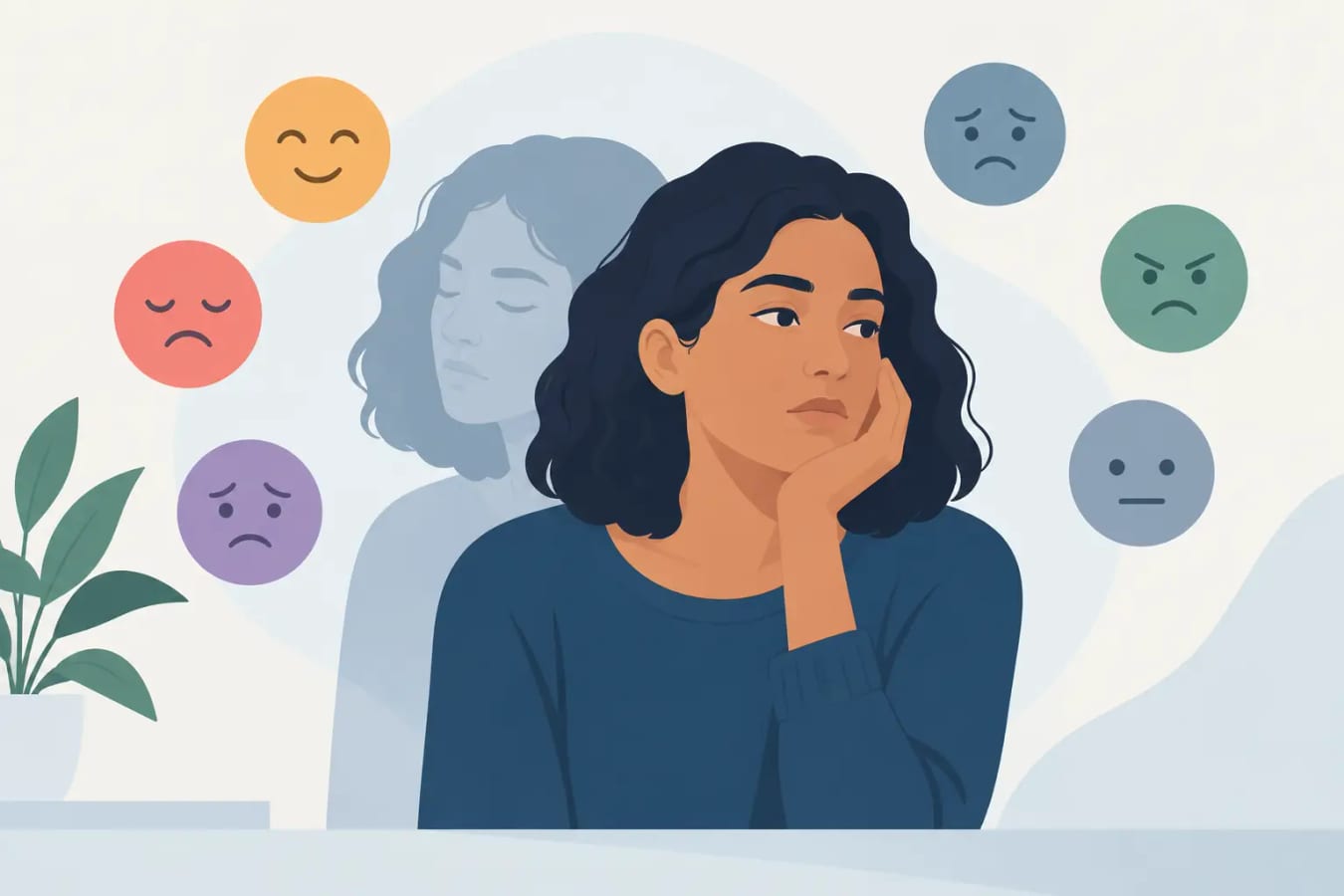
Numbness does not mean you are cold, broken, or incapable of caring. Often, it is a sign that your mind and body have been carrying more than they can comfortably process. It can be a protective response, and it deserves curiosity and care rather than shame.
Why do emotions feel numb?
Emotions can feel numb when your nervous system has been under stress for too long or has experienced something overwhelming. Your brain is designed to protect you. When feelings seem too painful, too intense, or too constant, it may turn the volume down on all of them, not just the difficult ones.
That protection can help a person get through a crisis, a demanding season, or a painful experience. The trade-off is that it may also make connection, pleasure, motivation, and closeness harder to access. You may know intellectually that something matters to you but struggle to feel it in the moment.
Emotional numbness looks different from person to person. You might feel detached from your partner or family, have trouble crying even when you want to, stop enjoying activities you once loved, or feel strangely calm during situations that would usually upset you. Some people feel physically present but mentally far away. Others notice that they are always busy because quiet moments bring an uncomfortable sense of emptiness.
Common reasons emotional numbness can happen
There is no single explanation for feeling numb. A counselor can help you understand the context of your experience without reducing you to a label. Still, several patterns commonly play a role.
Prolonged stress and burnout
When work demands, caregiving, financial pressure, school, conflict, or major life changes keep piling up, your system may have little room to recover. Burnout is not always dramatic. Sometimes it appears as indifference, exhaustion, procrastination, or the sense that nothing feels rewarding anymore.
People who have spent a long time meeting everyone else’s needs may be especially familiar with this. Pushing through can become a survival skill. Eventually, the feelings that once helped you recognize your limits may become harder to hear.
Depression and anxiety
Depression is not always experienced as obvious sadness. For some people, it feels like a flatness that makes daily life colorless. Anxiety can also contribute to numbness. If your body is constantly bracing for what might go wrong, disconnection may become a way to cope with the strain.
This is one reason it helps to look beyond appearances. Someone can be working, parenting, laughing at the right moments, and still be struggling deeply inside. Your experience is valid even if others cannot immediately see it.
Trauma, grief, and dissociation
After a frightening, harmful, or deeply painful event, numbness may be part of a trauma response. This can happen after a single event or after ongoing experiences such as abuse, discrimination, unstable relationships, chronic conflict, or feeling unsafe in your own home.
Dissociation is one word clinicians may use to describe feeling disconnected from your emotions, body, memories, or surroundings. It exists on a spectrum. Daydreaming during a boring meeting is different from regularly feeling unreal, losing time, or feeling separated from yourself. If numbness began after trauma or comes with these experiences, trauma-informed support can be especially helpful.
Grief can bring numbness, too. Loss does not always arrive as tears. Sometimes it arrives as disbelief, fog, or a sense that you cannot take in what happened. There is no correct emotional timeline for grieving.
Medication, substances, and physical health
Some medications can affect emotional range for some people, including certain medications used for mood concerns. Alcohol and other substances can also create or deepen emotional disconnection, particularly when they are being used to get through difficult feelings. Do not stop a prescribed medication on your own. A prescribing clinician can help you weigh benefits, side effects, and alternatives safely.
Sleep disruption, hormonal changes, chronic pain, thyroid concerns, nutritional deficiencies, and other health conditions may also affect mood and emotional energy. A medical check-in can be a caring part of the process, especially if numbness is new, persistent, or paired with changes in sleep, appetite, energy, or concentration.
What to do when you feel emotionally disconnected
Trying to force yourself to feel can create more pressure. A gentler approach is to start by noticing what is present, even if the answer is only, “I feel blank.” Numbness is still information. It may be your body’s way of saying that something needs attention, rest, safety, or support.
Begin with the basics your nervous system relies on. Regular meals, water, rest, movement, and time outside will not solve every underlying cause, but they can make it easier to recognize what you are carrying. Choose small actions instead of setting a standard you cannot meet. A five-minute walk, a shower, or sitting near a window can be enough for one day.
It can also help to reconnect with your senses before trying to reconnect with complex feelings. Notice the temperature of a mug in your hands, name five things you can see, listen closely to one song, or place both feet firmly on the floor. These grounding practices are not meant to make pain disappear. They can remind your body that you are here, in this moment, and deserving of care.
If words are difficult, try writing a few simple observations: “My chest feels tight.” “I have not laughed in a while.” “I felt a small moment of relief when I talked to my friend.” Emotional awareness often returns in small signals before it returns as a strong feeling.
Connection matters, but it should feel safe. Consider telling one trusted person that you have been feeling unlike yourself. You do not need to explain everything perfectly. You might simply say, “I have been feeling numb lately, and I could use some company.” Being witnessed with kindness can soften the isolation that often surrounds numbness.
When counseling can help
Counseling offers a private, nonjudgmental place to understand what numbness may be protecting you from and what you need now. Therapy is not about making you perform emotions or revisit every painful experience before you are ready. It is about building safety, choice, and skills at a pace that respects your life, background, beliefs, and goals.
A therapist may help you identify patterns of stress, explore past experiences, practice grounding, strengthen boundaries, or make space for grief. If relationship strain is part of the picture, couples or family counseling may help people speak more honestly about distance without assigning blame. The right approach depends on you. Some people need practical support for burnout; others need careful trauma work or coordination with medical care.
At Counseling Group of the Ozarks, counseling is approached as a collaborative process. You remain the expert on your own life. Reaching out is not proof that you have failed to cope. It is a courageous decision to seek support when coping alone is no longer giving you the relief you deserve.
Reach out sooner if numbness feels unsafe
Consider seeking professional support promptly if emotional numbness lasts for weeks, interferes with work, school, relationships, or self-care, or comes with hopelessness, panic, substance use, traumatic memories, or thoughts of harming yourself. If you are in immediate danger or think you may act on thoughts of suicide or self-harm, call or text 988 in the United States for the Suicide & Crisis Lifeline, call 911, or go to the nearest emergency room.
You do not have to wait until things become unbearable to ask for help. Feeling numb may be your system’s quiet signal that you have been carrying too much for too long. With patient support and a space where you can be fully yourself, feeling can begin to return in ways that are manageable, meaningful, and your own.