Getting started
When Individual Counseling Services Can Help
Published 6 min read

By the CGO Clinical Team
Licensed counselors and social workers in Springfield, MO · Meet the team
Some people start looking for help after a breaking point. Others start when nothing looks dramatic from the outside, but getting through the day has begun to feel heavier than it should. Individual counseling services can support both experiences. You do not have to wait until life is falling apart to deserve care.

Therapy is often imagined as a last resort, but that idea keeps many people stuck longer than they need to be. If your thoughts feel crowded, your emotions are harder to manage, your relationships are strained, or your usual coping habits are no longer working, counseling can offer a steady place to sort through what is happening. It is not about being weak. It is about having enough honesty to notice that something needs attention.
What individual counseling services are really for
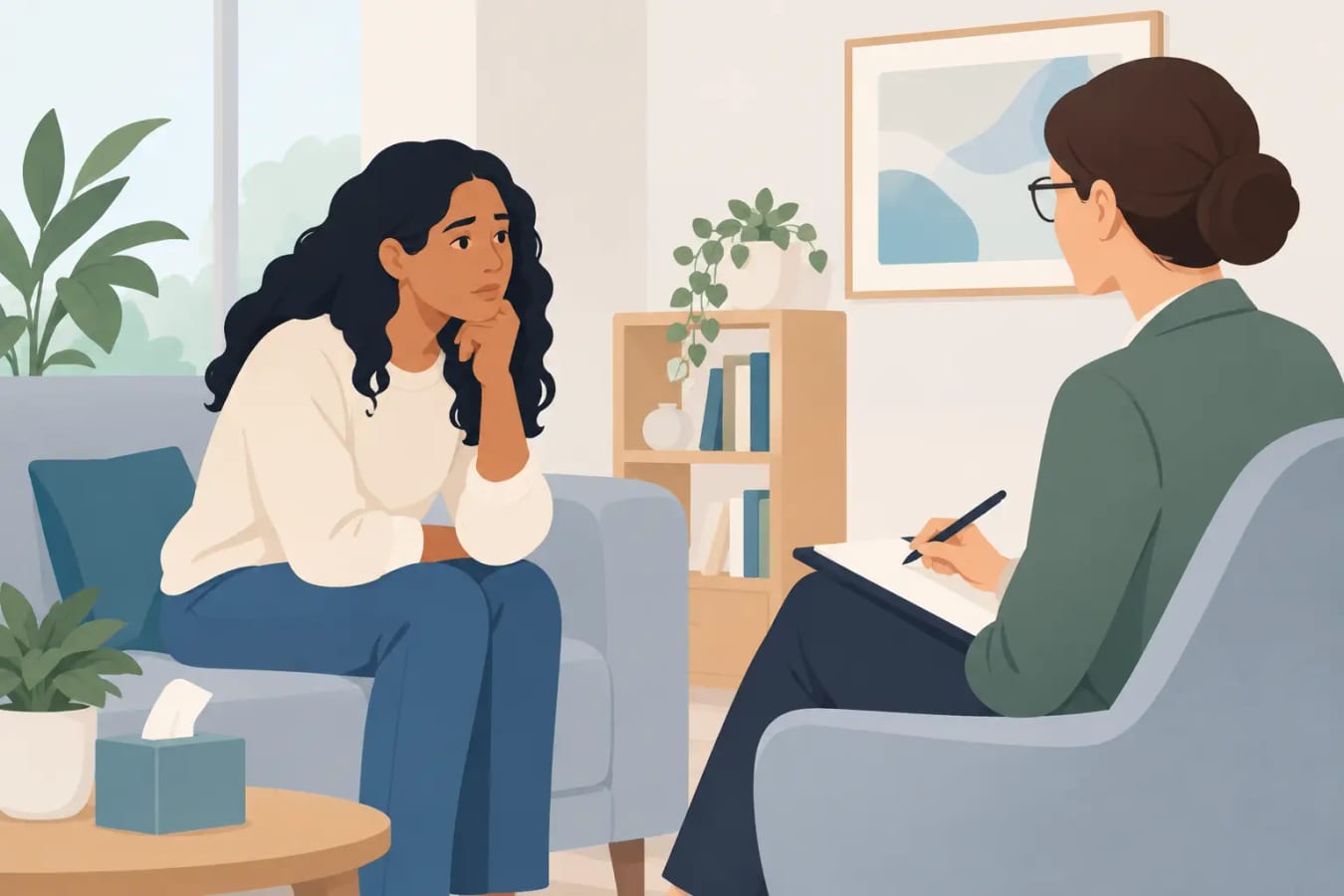
At its core, individual counseling is a one-on-one space built around you. That sounds simple, but it matters. In many parts of life, people are expected to perform, explain quickly, minimize pain, or keep moving. Counseling creates room to slow down and be fully heard without needing to make your experience more acceptable for someone else.
Individual counseling services can help with anxiety, depression, grief, trauma, burnout, relationship stress, identity questions, major life transitions, and the ongoing weight of stress. They can also help when the problem is harder to name. Sometimes people come to therapy because they feel numb, restless, angry, disconnected, or unlike themselves. Sometimes they know exactly what hurts. Sometimes they only know that life feels harder than it used to.
That difference matters because good counseling is not only for clear, diagnosable problems. It can also help with confusion, self-doubt, loneliness, and patterns that keep repeating even when you are trying to change them.
Signs it may be time to reach out
There is no perfect threshold for starting therapy. Still, there are moments when reaching out can make a real difference.
If you are spending a lot of energy just trying to hold yourself together, that is worth paying attention to. If your sleep is off, your concentration is slipping, your temper is shorter, or you keep cycling through the same thoughts with no relief, counseling may help you interrupt that pattern. The same is true if you feel disconnected from people you care about, overwhelmed by responsibilities, or unsure how to move forward after a loss or change.
For some people, the sign is emotional pain. For others, it is functioning. You may still be showing up to work, parenting, studying, or managing a household while feeling internally exhausted. Being able to keep going does not mean you are doing well. Many people become very skilled at surviving while privately struggling.
Therapy can also be helpful before things escalate. If you notice that stress is building, communication is getting harder, or past experiences are shaping your present in ways you do not like, earlier support can be more effective than waiting until you are in crisis.
What happens in individual counseling services
One of the biggest fears people have is not knowing what to expect. The first few sessions usually focus on understanding what brings you in, what your life looks like right now, and what you hope will feel different. You do not need to arrive with a polished explanation. A good counselor will help you put language to experiences that may feel messy or hard to describe.
As therapy continues, the work often includes noticing patterns, making connections, learning practical tools, and exploring emotions with more honesty and less shame. Depending on your needs, counseling might focus on coping skills, boundaries, trauma recovery, grief support, self-esteem, relationship patterns, or decision-making.
This is where the individual part truly matters. Therapy is not supposed to force everyone through the same process. Some people need structure and strategies they can use right away. Some need space to process painful experiences at a pace that feels safe. Most need a mix of both. What helps one person feel supported may feel too fast, too slow, too direct, or too abstract for someone else.
That is why individualized care matters more than a one-size-fits-all approach. The goal is not to fit you into a formula. The goal is to understand who you are, what you carry, and what kind of support will actually help.
The value of feeling safe with your counselor
A strong therapeutic relationship is not a bonus feature. It is central to the work. People are more likely to open up, stay engaged, and make progress when they feel respected and emotionally safe.
That safety is not about being told what you want to hear. It is about being met with dignity, care, and honesty. You should not feel like you have to edit major parts of yourself to be accepted in therapy. Your age, race, culture, beliefs, sexuality, gender identity, family background, and life experience all shape how you move through the world. Good counseling makes room for that complexity.
This is especially important for people who have felt misunderstood, judged, dismissed, or invisible in other settings. Inclusive counseling does not treat identity as a side note. It recognizes that your lived experience matters and that healing is harder in spaces where you do not feel fully seen.
In-person or online counseling: which is better?
For many people, the honest answer is it depends. In-person sessions can feel grounding. There is something meaningful about stepping into a dedicated space and having a break from the noise of everyday life. Some clients find it easier to focus, connect, and speak openly face to face.
Online therapy offers a different kind of access. It can reduce travel time, make scheduling easier, and help people continue care when work, parenting, health concerns, or distance would otherwise get in the way. For some, being in their own home makes it easier to talk. For others, privacy at home can be harder to find.
Neither format is automatically better. What matters is whether the setting helps you show up consistently and honestly. For clients in Missouri, having both in-office and online options can make support more realistic when life is already demanding a lot.
What counseling can help you build
People sometimes think therapy is only about reducing symptoms, and that can absolutely be part of it. Relief matters. But counseling can also help you build a different relationship with yourself and your life.
That may look like recognizing your needs sooner instead of pushing past them. It may mean setting boundaries with less guilt, understanding how past wounds still affect your present, or responding to stress without immediately shutting down, lashing out, or spiraling. It may also mean learning to trust your own voice again.
Progress rarely looks perfect. Some seasons of therapy feel clarifying and active. Others feel slower, with changes that are subtle at first. You may have sessions that bring relief and sessions that leave you thinking hard afterward. That does not mean therapy is failing. Often, it means you are doing real work.
The trade-off is that growth can be uncomfortable. Counseling asks for honesty, patience, and willingness. But it should not feel punishing. Even when the work is hard, the process should feel supportive and grounded.
Choosing individual counseling services that fit you
When you are looking for a counselor, credentials matter, but fit matters too. You want someone with clinical skill, yes, but also someone whose style feels workable for you. Some clients want gentle reflection. Others want more direct feedback. Some need a counselor who understands specific identity-related stress, family dynamics, trauma, or life stages.
It is okay to ask practical questions about approach, availability, fees, insurance, telehealth, and what the first session will be like. Those questions are not a sign that you are difficult. They are part of finding care that is actually accessible.
It is also okay if the first counselor you try is not the right match. That can feel discouraging, especially if reaching out took a lot of courage. But a mismatch does not mean therapy is not for you. It usually means the relationship, approach, or timing was not right.
At Counseling Group of the Ozarks, the heart of the work is simple: people deserve care that respects their dignity, honors their individuality, and meets them with compassion when life feels hard to carry alone.
If you have been wondering whether your pain is serious enough, whether your struggle counts, or whether you are allowed to ask for help before things get worse, the answer is yes. You do not need to prove that you are hurting enough to deserve support. Sometimes the bravest next step is simply letting someone sit beside you while you figure out what healing can look like.