Getting started
Therapy vs Psychiatry: Which Do You Need?
Published 6 min read

By the CGO Clinical Team
Licensed counselors and social workers in Springfield, MO · Meet the team
When you are already carrying anxiety, burnout, grief, or relationship stress, figuring out therapy vs psychiatry can feel like one more overwhelming decision. Many people are not asking for the perfect answer. They just want to know where to start, what kind of help fits, and whether they will be understood when they reach out.
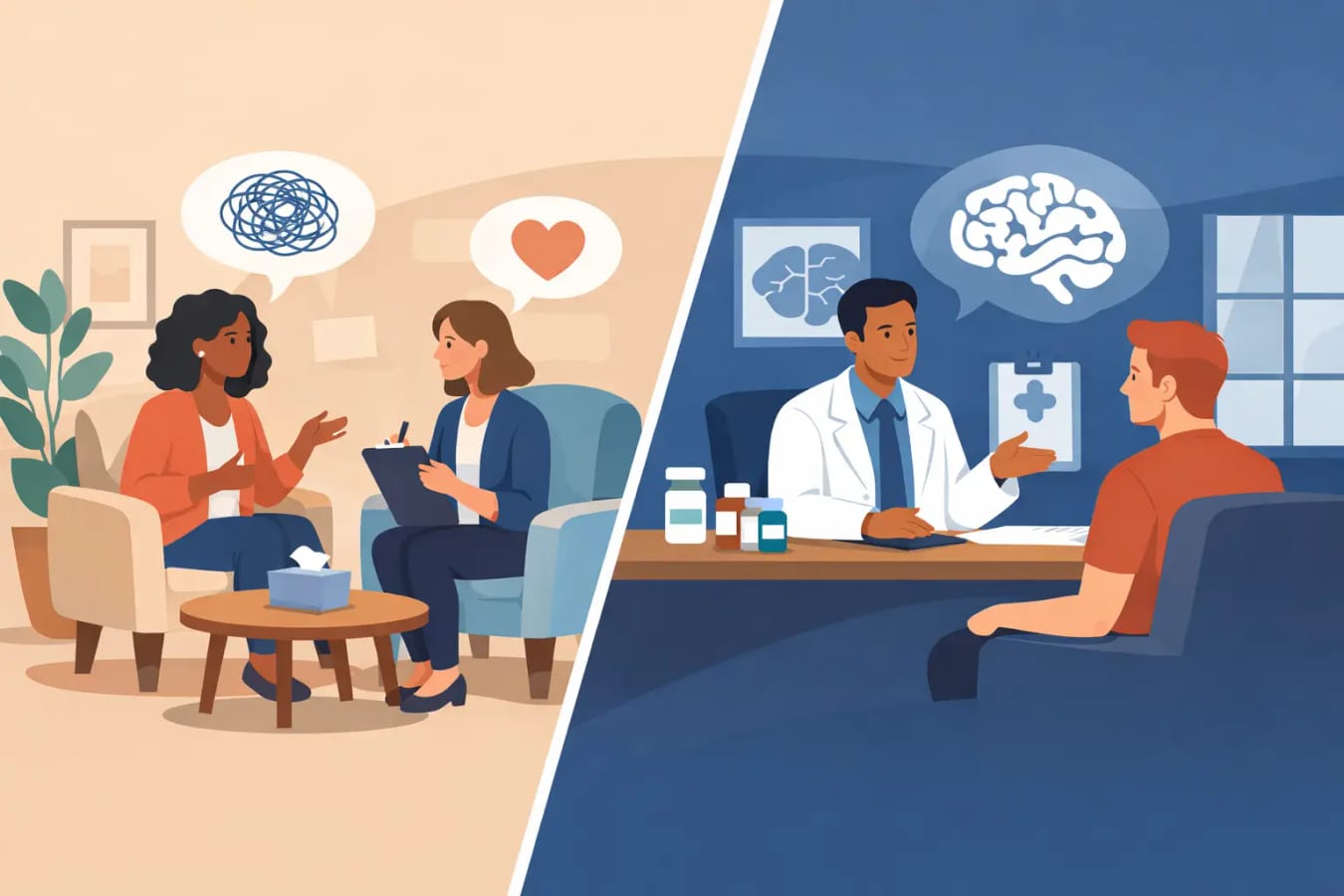
The good news is that both therapy and psychiatry are forms of mental health care. They are not competing options, and one is not "more serious" than the other. They simply serve different roles. For some people, therapy is the right starting point. For others, psychiatry matters because medication could ease symptoms that make daily life feel unmanageable. And for many, the most effective care includes both.
Therapy vs psychiatry: what is the difference?
Therapy usually means meeting with a licensed mental health professional to talk through what you are experiencing, understand patterns, build coping skills, and work toward change. Depending on your needs, therapy may focus on anxiety, depression, trauma, stress, identity concerns, grief, relationships, parenting, or family conflict. It can be short term and practical, longer term and insight-oriented, or something in between.
Psychiatry is medical mental health care. A psychiatrist is a medical doctor or osteopathic physician who evaluates mental health symptoms, considers physical and biological factors, diagnoses conditions, and can prescribe medication. Psychiatric care often includes assessment, medication management, and monitoring how symptoms respond over time.
The simplest way to think about it is this: therapy creates space to process, heal, and practice new ways of coping, while psychiatry focuses on the medical side of mental health, including whether medication may help. Both can be deeply valuable. The right choice depends on what you are dealing with, how severe symptoms feel, and what kind of support you want.
What therapy can help with
Therapy is often the best place to start when you want support that goes beyond symptom relief. If your mind feels stuck in worry, your relationships feel strained, or old experiences keep shaping your present, therapy gives you room to explore what is happening with a trained professional who can help you make sense of it.
People often come to therapy because they feel overwhelmed but cannot always explain why. Maybe you are snapping at people you love, avoiding things that used to feel easy, or carrying a constant sense of dread. Maybe your child is struggling emotionally, your marriage feels disconnected, or your usual coping tools no longer work. Therapy helps you slow down enough to understand the pattern, not just react to the pain.
It also offers something medication cannot provide on its own: a relationship built around reflection, trust, and change. In therapy, you can learn emotional regulation, communication tools, boundary setting, trauma recovery skills, and healthier ways to respond to stress. That matters because many mental health struggles are not only chemical. They are also shaped by life experiences, relationships, loss, pressure, identity, and nervous system overload.
What psychiatry can help with
Psychiatry can be especially helpful when symptoms are intense, persistent, or interfering with your ability to function. If anxiety is causing panic attacks, depression makes it hard to get out of bed, mood shifts feel extreme, or sleep is badly disrupted, medication may be worth discussing.
Psychiatrists assess symptoms through a medical lens. They look at how long symptoms have lasted, how severe they are, whether there may be underlying physical contributors, and what treatment options make sense. Medication is not the answer for everyone, and a good psychiatrist will not treat it like a shortcut. But for some people, the right medication reduces the volume of symptoms enough that they can think more clearly, rest more consistently, and participate more fully in therapy and daily life.
This is one of the most important trade-offs to understand. Medication can ease symptoms, but it usually does not teach coping skills, repair relationship patterns, or process grief and trauma. Therapy can help with those things, but if symptoms are severe, it may be harder to engage in therapy without medical support. That is why combined care can be so effective.
When therapy may be the better first step
If you are dealing with stress, grief, relationship conflict, life transitions, trauma, self-esteem issues, family challenges, or persistent anxiety or sadness that you want to understand more deeply, therapy is often a strong first choice. It can also be a helpful starting point if you are unsure what kind of care you need.
Many people worry that they need to be in crisis before therapy is "justified." You do not. Therapy is appropriate when life feels heavy, confusing, lonely, or hard to manage. It is a place to bring the concerns that keep following you around, even if they seem small from the outside.
Therapy may also be the better fit if you want a non-medication approach first. Some people are open to medication later if needed, but want to begin with conversation, coping strategies, and emotional support. That is a valid path.
When psychiatry may be the better first step
Psychiatry may make sense earlier if symptoms are severe, safety is a concern, or you suspect medication could help stabilize things. For example, if you are experiencing debilitating panic, major depression, symptoms that suggest bipolar disorder, significant attention difficulties, or a mental health condition that has responded well to medication in the past, psychiatric evaluation can be important.
It may also be the right first step if you have tried therapy before and still felt blocked by the intensity of your symptoms. Sometimes people are working very hard in therapy but remain so exhausted, agitated, or emotionally flooded that progress feels out of reach. That does not mean therapy failed. It may mean an added layer of support is needed.
If you are having thoughts of harming yourself, feel unable to care for yourself safely, or are experiencing a mental health emergency, urgent evaluation is important. In that situation, getting immediate psychiatric or emergency support matters more than trying to sort everything out alone.
Do you have to choose one?
No. Therapy vs psychiatry is often framed like an either-or decision, but real life is usually more flexible than that. Many people benefit from therapy alone. Many benefit from psychiatry alone for a period of time. And many do best with both working together.
Imagine someone with depression who starts medication and begins sleeping better, feeling less numb, and having enough energy to show up more fully in therapy. Or someone in therapy who gains self-awareness and coping tools, then decides to meet with a psychiatrist because panic symptoms still feel relentless. Neither path is more legitimate. Both are forms of care.
The goal is not to prove how much you can handle without help. The goal is to find support that actually supports you.
How to decide what you need right now
Start with the question beneath the question: what feels hardest at the moment? If you need space to talk, process, and build skills, therapy is likely the right place to begin. If symptoms feel medically significant or are disrupting sleep, appetite, focus, or safety, psychiatry deserves consideration.
You also do not need to figure this out perfectly before reaching out. A good therapist can help you recognize when psychiatric care might be useful. A good psychiatrist will often recommend therapy alongside medication when it fits. Mental health care works best when it is responsive to your actual life, not just your diagnosis.
For many people, the biggest barrier is fear of being judged, dismissed, or pushed into something they do not want. Compassionate care should not feel like that. You deserve support that respects your background, your pace, your questions, and your right to be involved in decisions about your treatment.
If you are in Missouri and wondering where to start, a counseling practice like Counseling Group of the Ozarks can be a meaningful first step for exploring what kind of support fits your needs. Whether you begin with therapy, consider psychiatry, or eventually use both, what matters most is that you do not have to sort it out alone.
Reaching out for help is not a sign that you have failed at coping. It is often the moment you stop carrying everything by yourself and give healing a real place to begin.