Emotional health
When Therapy for Life Transition Stress Can Help
Published 6 min read

By the CGO Clinical Team
Licensed counselors and social workers in Springfield, MO · Meet the team
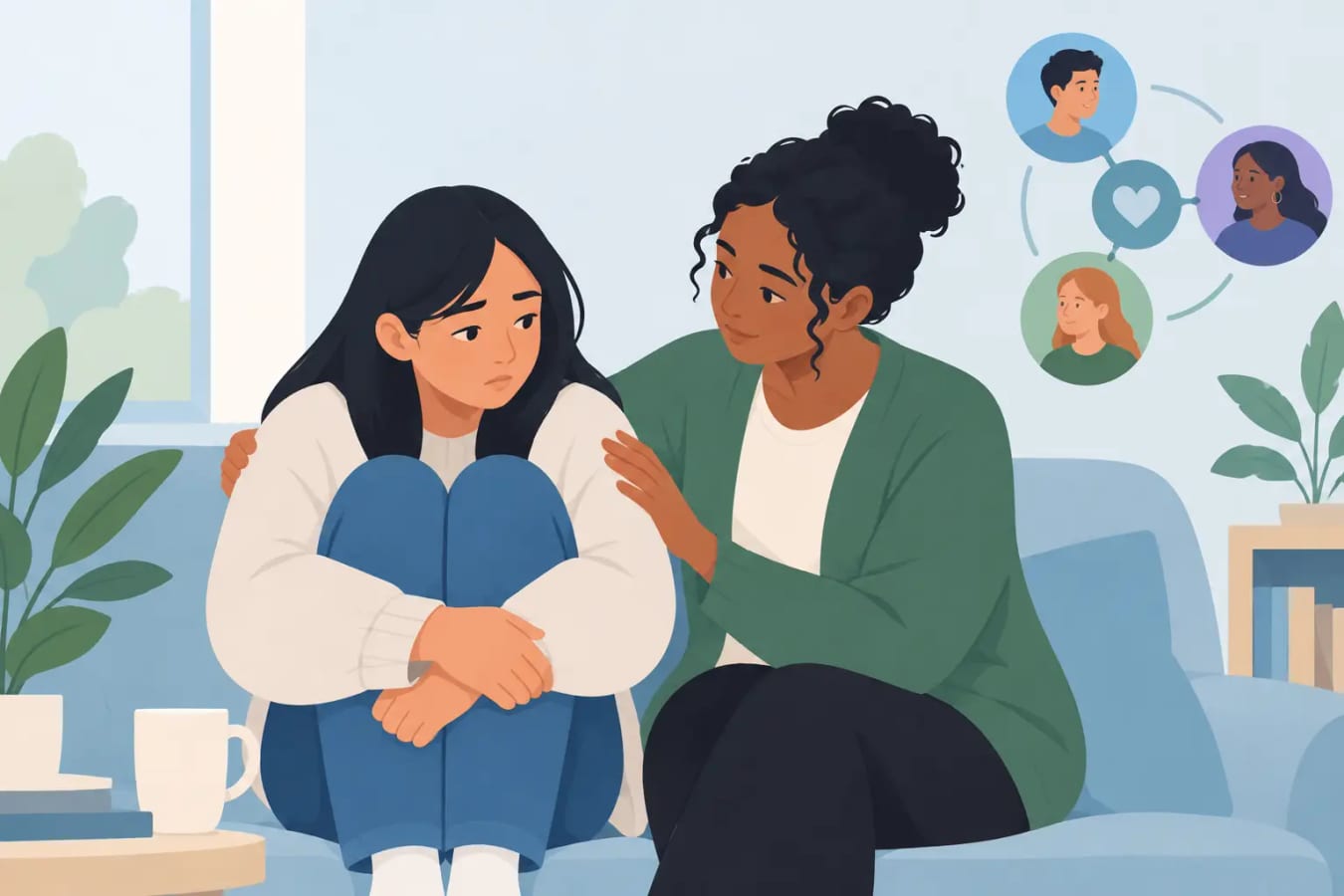
A new job can look like a good opportunity and still leave you awake at 2 a.m. A child leaving home can bring pride alongside grief. A move, breakup, marriage, diagnosis, retirement, loss, or shift in identity can change the shape of daily life before your emotions have had time to catch up. Therapy for life transition stress offers a place to slow down, name what is happening, and find support without having to minimize the impact of change.
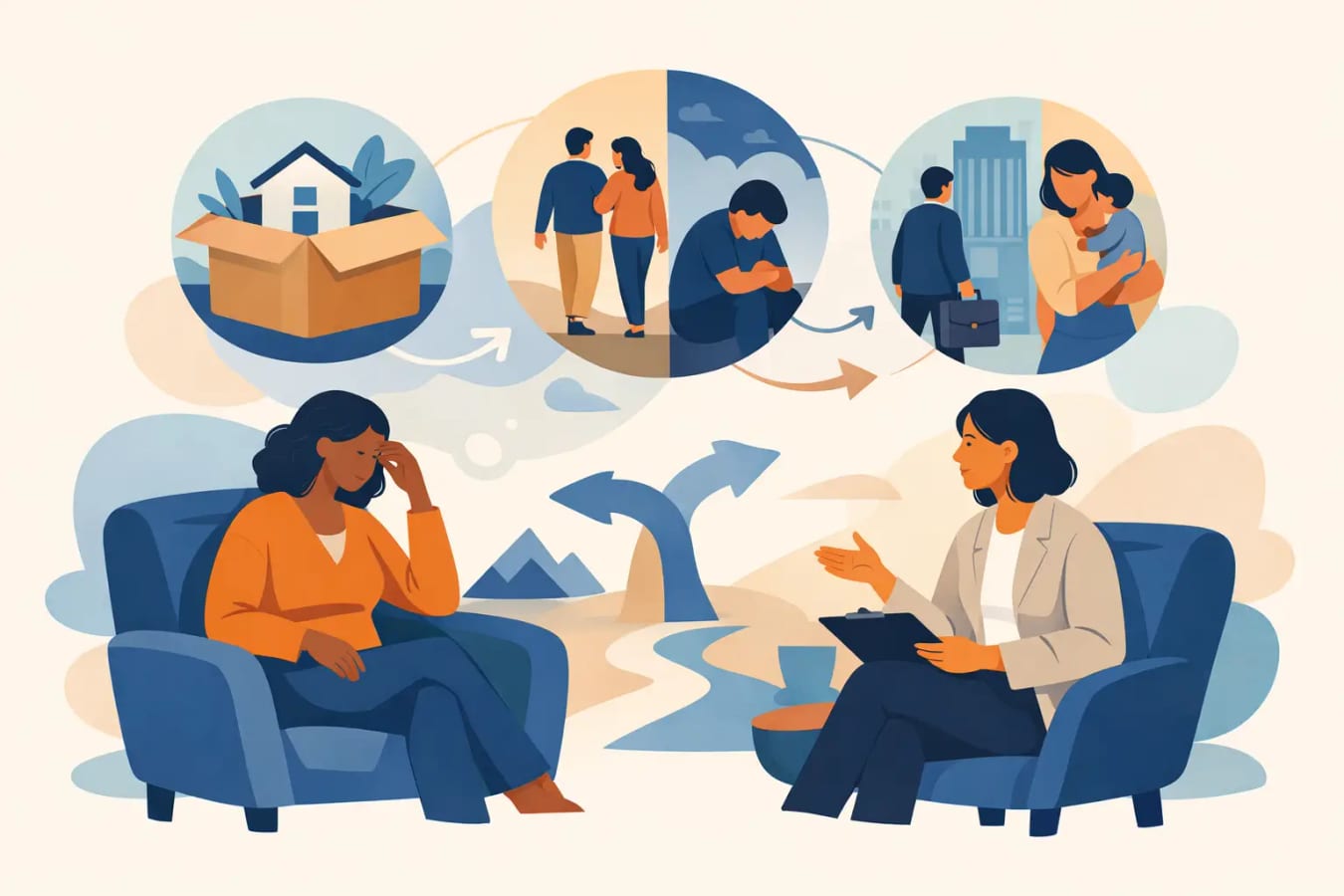
Transitions are not only difficult when something goes wrong. Even wanted changes can require you to let go of familiar routines, roles, relationships, expectations, or versions of yourself. If your usual ways of coping are no longer helping, counseling can be a practical and compassionate next step.
Why life changes can feel so overwhelming
Life transitions often ask many things of us at once. You may need to make decisions, adjust financially, care for other people, learn new routines, and manage other people's expectations while carrying your own uncertainty. On the outside, you may appear capable. Inside, you may feel unsettled, exhausted, irritable, numb, or unlike yourself.
Part of the stress comes from ambiguity. A transition may not have a clear ending date or a single right way to handle it. You may miss what was familiar while also knowing that you cannot, or do not want to, go back. That tension is human. It does not mean you are ungrateful, weak, or failing.
Some changes can also stir up older experiences. Starting college may bring up fears of rejection. Becoming a parent may raise questions about how you were parented. A career change may touch long-held beliefs about worth, security, or success. Therapy can help connect those patterns with care, rather than treating your response as an overreaction.
When stress becomes more than an adjustment period
There is no rule that says you should be "over it" after a certain number of weeks. Still, it may be time to seek support when distress is lingering, growing, or affecting your ability to live in ways that matter to you.
You might notice that sleep, appetite, concentration, or motivation have changed. You may be withdrawing from people you usually trust, feeling constantly on edge, crying more often, or having more conflict at home. Some people keep moving through the transition but feel emotionally disconnected from their life. Others become stuck in loops of worry, self-criticism, or indecision.
Counseling can also be helpful before you reach a breaking point. You do not need to prove that your pain is severe enough to deserve care. Reaching for support when a change first begins to feel heavy can create room for steadier choices and more self-understanding.
Transitions that commonly bring people to counseling
People seek support for many different changes, including a move, a new school or career, divorce or separation, marriage, pregnancy, parenting, an empty nest, caregiving, retirement, grief, health changes, immigration, changes in faith, and shifts in gender identity or sexual orientation. The transition itself may be shared by many people, but your experience of it is uniquely yours.
For example, a promotion may bring excitement for one person and intense anxiety for another. Moving closer to family may provide help while also creating new boundaries to navigate. Leaving a relationship may be necessary and still deeply painful. Therapy makes room for the full truth instead of forcing you to choose one acceptable feeling.
What therapy for life transition stress can offer
A therapist does not take over your decisions or tell you how to live. The work is collaborative. You bring your history, values, relationships, culture, beliefs, hopes, and concerns. Your therapist brings attentive listening, clinical skill, and a perspective that can help you see what is difficult to see when you are in the middle of a major change.
Early sessions often focus on understanding what has changed and what feels most urgent. You may explore what you have lost, what you are afraid of, and what you want your life to look like on the other side of this transition. Sometimes relief begins with having a space where you do not have to be the strong one, the problem-solver, or the person who reassures everyone else.
Therapy may help you recognize the difference between discomfort that comes with growth and situations that are asking too much of you. That distinction matters. Not every hard feeling needs to be fixed, but some patterns deserve attention, such as ongoing panic, depression, isolation, unsafe relationship dynamics, or reliance on substances to get through the day.
Building coping skills that fit your real life
Helpful coping is not one-size-fits-all. A strategy that works for a busy parent may not work for a college student, a caregiver, or someone grieving a loss. Together, you and your therapist can identify approaches that are realistic for your circumstances.
This might include creating routines when everything feels unfamiliar, practicing grounding skills when anxiety rises, setting boundaries with people who expect too much, or learning how to communicate needs more directly. It can also mean making room for rest, joy, grief, and connection rather than treating those needs as optional.
The goal is not to become unaffected by change. It is to develop a steadier relationship with yourself while change is happening. Over time, many people find they can tolerate uncertainty with less fear and make choices that feel more aligned with who they are.
Making space for conflicting feelings
A common barrier to seeking therapy is the belief that you should feel only grateful, excited, relieved, or happy about a positive change. But emotions rarely arrive in neat categories. You can love your new home and miss your old community. You can be certain about ending a relationship and mourn the future you imagined. You can be proud of your child and feel lost as your role changes.
Holding conflicting feelings is not hypocrisy. It is often a sign that something meaningful is changing. In therapy, you can speak honestly about those contradictions without being judged or rushed toward a brighter perspective.
This can be especially important when people around you do not understand the weight of the transition. Perhaps they see only the achievement, the celebration, or the practical side of the change. A counseling relationship can offer emotional safety when you need a place for the parts of your story that have not been fully seen.
Choosing support that feels right
The relationship with your therapist matters. You deserve care where you feel respected as a whole person, not reduced to a diagnosis, a role, or a single difficult season. It is reasonable to ask about a therapist's approach, experience with your concern, scheduling options, fees, and whether telehealth is available.
For some people, in-person sessions offer a welcome pause from home or work. For others, online counseling makes consistent support more possible because of transportation, health needs, caregiving responsibilities, or a full schedule. Neither option is automatically better. The best fit is the one that allows you to show up with enough privacy, comfort, and consistency to do meaningful work.
At Counseling Group of the Ozarks, clients can access in-office counseling in Springfield, Missouri, or online options when appropriate. Care is grounded in respect for each person's background, identity, beliefs, and goals because no life transition can be understood apart from the person living through it.
You do not have to wait for certainty
It can feel tempting to postpone therapy until you know exactly what decision to make or until life settles down. Yet transitions are often the very times when support can be most valuable. You can begin before you have the right words, a complete plan, or confidence about what comes next.
Asking for help is not a sign that you cannot handle change. It is a courageous way to care for yourself while you are carrying it. One conversation can be a beginning: a chance to feel less alone, to understand your response with more compassion, and to take the next step at a pace that honors your dignity.