
Emotional health
When Therapy for Chronic Overwhelm Can Help
Published 6 min read

By the CGO Clinical Team
Licensed counselors and social workers in Springfield, MO · Meet the team
You may be getting through every day while quietly feeling like one more request, notification, or unexpected change could push you past your limit. You may still show up for work, care for people you love, and handle what must be handled - yet feel depleted before the day has really begun. Therapy for chronic overwhelm can offer a place to set that burden down without having to prove that it is heavy enough.
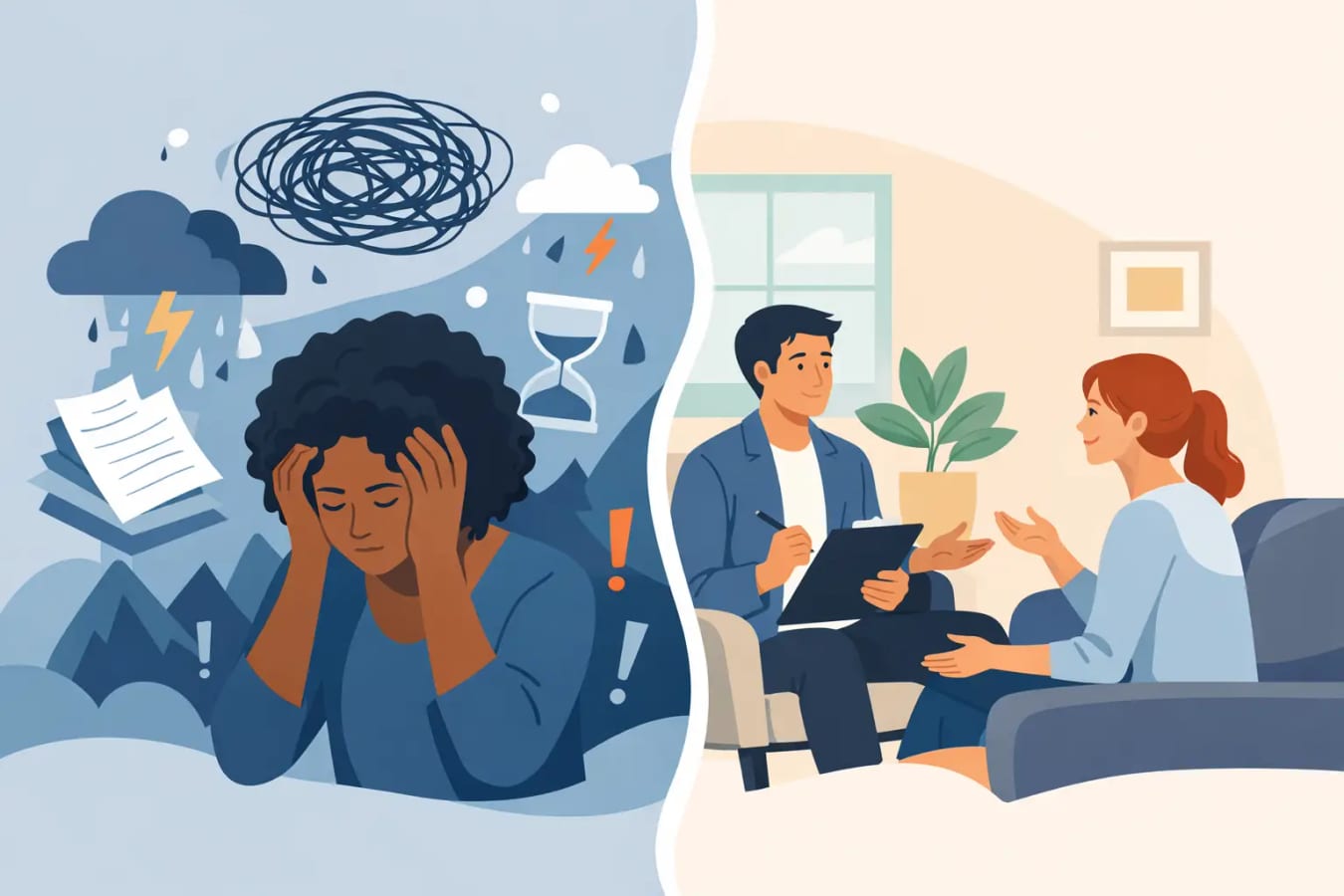
Chronic overwhelm is more than having a busy week. It is the ongoing sense that your responsibilities, emotions, or circumstances exceed your ability to recover. When that feeling becomes familiar, many people blame themselves for not being more organized, grateful, productive, or resilient. But overwhelm is often a signal, not a personal failure. It can be your mind and body asking for support, rest, clarity, and a different way forward.
What chronic overwhelm can look like
Overwhelm does not always look dramatic from the outside. Sometimes it looks like putting off a simple phone call for weeks. It can be irritability with people you care about, difficulty concentrating, tears that seem to arrive out of nowhere, or feeling numb when you expected to feel joy. For others, it is a constant mental checklist that never turns off, even during time meant for rest.
You might notice that small decisions feel unusually hard. You may avoid opening mail, replying to messages, making appointments, or starting tasks because each one feels like another demand on an already overloaded system. Sleep may be restless, your body may feel tense, and activities that once helped you recharge may no longer feel restorative.
These experiences can be connected to many parts of life: caregiving, workplace pressure, financial strain, parenting, health concerns, grief, relationship conflict, identity-related stress, trauma, or a major transition. Sometimes there is one clear source. Often, it is an accumulation of demands that has quietly become too much.
Chronic overwhelm can also overlap with anxiety, depression, burnout, attention-related challenges, trauma responses, or medical concerns. Therapy does not require you to know exactly what is happening before you begin. A thoughtful counselor can help you make sense of your experience without reducing you to a label.
Why pushing through often stops working
Pushing through can be useful in a short-term crisis. It helps people meet deadlines, survive difficult seasons, and care for others when there are few alternatives. The problem comes when survival mode becomes your normal setting.
When your nervous system rarely gets a chance to settle, even ordinary demands can begin to feel threatening or impossible. You may respond by working harder, withdrawing, overplanning, people-pleasing, or trying to control every detail. Those strategies may have protected you at one point. Over time, though, they can leave less room for rest, connection, and the parts of life that make you feel like yourself.
This is why advice such as “just take a break” can feel frustrating. Rest matters, but it may not address the conditions creating the overload. A weekend away cannot always resolve an unsustainable workload, a painful family dynamic, unresolved grief, or years of feeling responsible for everyone else’s wellbeing. Relief often requires more than a productivity tool. It requires care that considers the whole person and the context they are living in.
How therapy for chronic overwhelm can help
Therapy for chronic overwhelm is not about teaching you to tolerate an impossible life more efficiently. It is a collaborative process of understanding what is draining your capacity, what support you need, and what changes may be possible.
Early conversations may focus on your current stressors and how overwhelm shows up in your thoughts, body, relationships, and daily routines. You and your therapist might explore when this pattern began, what makes it worse, and what has helped even a little. There is no requirement to tell your whole story perfectly or to arrive with a clear goal. Starting with “I cannot keep doing things this way” is enough.
From there, therapy may help you recognize the beliefs that keep overload in place. Perhaps you have learned that saying no is selfish, that asking for help is unsafe, or that your worth depends on being useful. These beliefs often have understandable roots. Looking at them with compassion can create room for new choices.
Practical skills can matter, too. A therapist may help you identify early signs of overload, break responsibilities into manageable steps, communicate needs more clearly, and create boundaries that fit your actual life. The goal is not perfection. It is to build a steadier relationship with your time, energy, emotions, and limits.
For some people, therapy also provides space to grieve what chronic stress has taken from them. You may be mourning lost time, missed opportunities, a relationship that changed, or the version of yourself who once had more energy. That grief deserves attention. Healing is not always about returning to who you were before. It may involve creating a life that is more honest, sustainable, and aligned with who you are now.
The right approach depends on your needs
There is no single therapy method that works best for every overwhelmed person. Cognitive behavioral approaches can help some people notice unhelpful thought patterns and experiment with more supportive responses. Trauma-informed therapy may be especially meaningful when your nervous system has learned to stay on alert because of past experiences. Emotion-focused, relational, or mindfulness-based approaches may help you understand your feelings, strengthen connection, and practice being present without judgment.
The therapeutic relationship matters as much as the approach. You deserve a counselor who listens carefully, respects your identity and values, and treats you as the expert on your own life. If you have had experiences of being dismissed, misunderstood, or pressured to explain yourself, emotional safety is not an extra. It is part of effective care.
What therapy does and does not ask of you
Therapy can support meaningful change, but it does not erase every external pressure. A counselor cannot make childcare instantly affordable, remove a harmful workplace policy, or fix a loved one’s behavior. What therapy can do is help you see your options more clearly, respond with greater intention, and decide where your energy belongs.
It also does not ask you to become endlessly calm. Anger, sadness, fear, and exhaustion may be reasonable responses to what you are carrying. Rather than judging those emotions, therapy can help you understand what they are trying to communicate and choose how to care for yourself within real-life constraints.
Progress may be gradual. You might first notice that you recognize overwhelm sooner, pause before automatically agreeing to something, or recover more quickly after a difficult day. Those shifts can be significant. Small changes in capacity often create space for larger changes over time.
Taking the first step when you already feel maxed out
When you are overwhelmed, even finding a therapist can feel like another task on the list. Keep the first step small. You do not need to research every type of therapy or prepare a polished explanation of your life. You can begin by asking about availability, session format, fees, insurance, or whether a counselor has experience with the concerns you are facing.
For many people, flexible care makes beginning more possible. In-office counseling in Springfield, Missouri or online sessions may offer different kinds of access depending on your schedule, transportation, privacy, and comfort. Counseling Group of the Ozarks aims to meet clients with respect and care, whether they are seeking therapy for the first time or returning after a difficult season.
If your overwhelm includes thoughts of harming yourself or feeling unable to stay safe, seek immediate support through emergency services, a local crisis resource, or someone you trust who can stay with you. You do not have to carry an urgent moment alone.
You are not required to earn support by reaching a breaking point. Choosing a space where you can be heard, understood, and treated with dignity can be a brave beginning - especially when you have spent a long time holding everything together.