Getting started
What Is Individual Counseling Meaning?
Published 6 min read

By the CGO Clinical Team
Licensed counselors and social workers in Springfield, MO · Meet the team
Maybe you have been holding it together for a long time, and lately that effort feels heavier than it used to. You may have searched for the individual counseling meaning because you want a clear answer before taking any next step. That makes sense. When life already feels hard, the last thing you need is vague language or pressure.

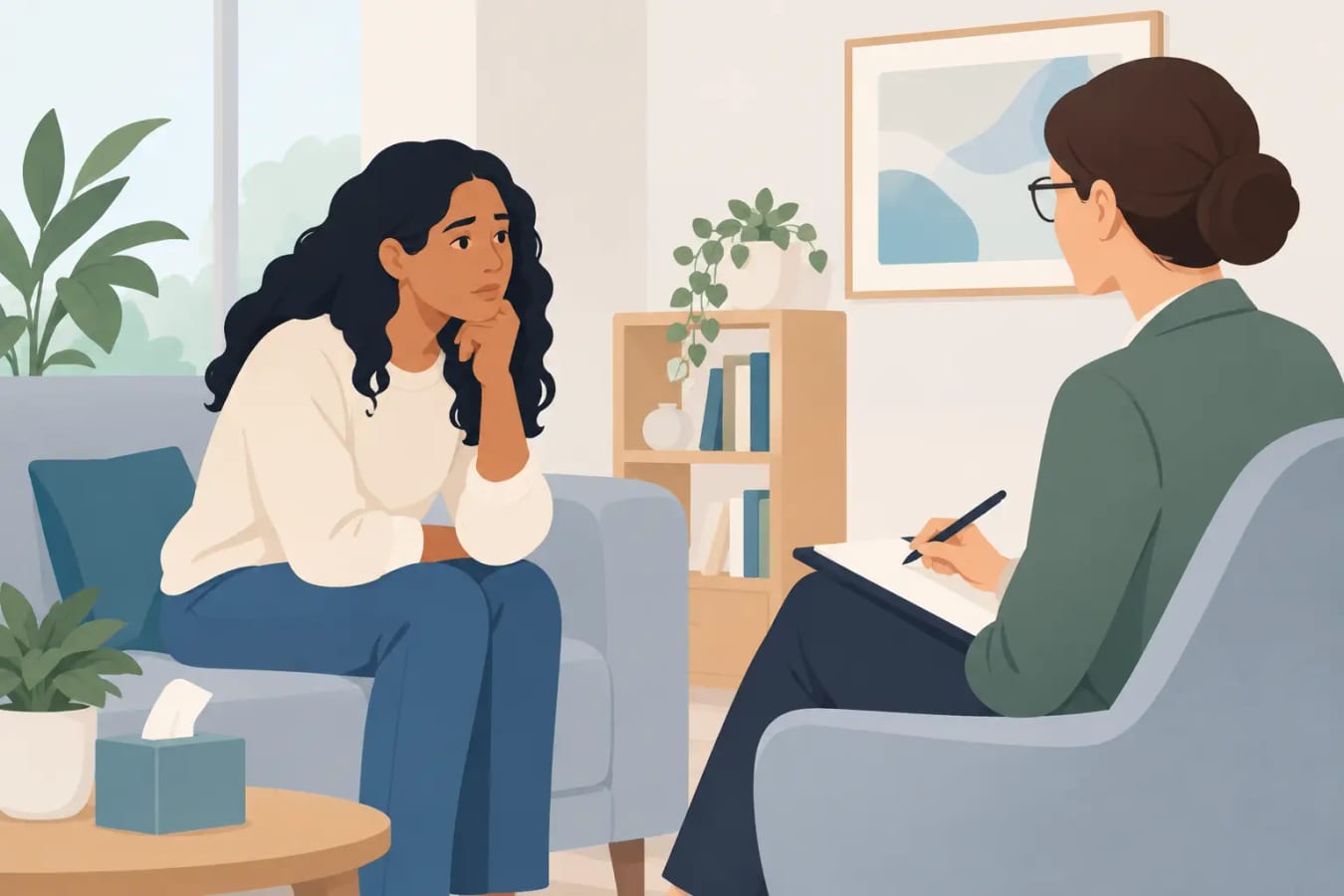
Individual counseling is one-on-one therapy between you and a licensed mental health professional. It is a private space to talk through what you are carrying, understand patterns that may be keeping you stuck, and work toward relief, healing, or change at a pace that feels manageable. The focus is not on fixing who you are. It is on helping you feel more supported, more aware, and more equipped to handle what you are facing.
Individual counseling meaning in plain language
At its core, individual counseling means meeting with a therapist who is there to focus fully on you - your experiences, your emotions, your relationships, your goals, and your wellbeing. Unlike group therapy, where several people share space and support, individual counseling centers your story. Unlike couples or family counseling, it does not ask you to work on a shared dynamic in the room with others.
That one-on-one format matters. Some people need privacy before they can speak honestly. Others are trying to sort out thoughts they have never said out loud. Individual counseling gives you room to do that without needing to protect someone else’s feelings, manage the conversation, or explain your pain in a way that makes it easier for other people to hear.
This kind of counseling can help with anxiety, depression, trauma, grief, stress, relationship concerns, life transitions, identity questions, burnout, low self-esteem, and many other challenges. It can also be useful even when there is no single crisis. Sometimes the reason is simpler and just as valid: you do not feel like yourself, and you want support understanding why.
What happens in individual counseling?
A lot of people imagine therapy as lying on a couch while someone silently takes notes. Real counseling is usually much more human than that. In most sessions, you sit with a therapist and talk about what has been happening, how it is affecting you, and what you want to be different.
Early sessions often focus on getting to know you. A therapist may ask about your current concerns, your history, your relationships, your stressors, and what support has or has not helped before. This is not an interrogation. It is a way of understanding the context of your life so the work can fit you rather than forcing you into a generic plan.
Over time, sessions may include processing painful experiences, learning coping tools, noticing patterns, practicing new ways of responding, or making space for feelings you have been pushing down. Some sessions feel deeply emotional. Others are practical and focused. Many are a mix of both.
There is no single correct way for therapy to look. If you come in needing immediate coping skills for panic, that may shape the work. If you want to understand long-standing family patterns or trauma responses, that may take more time and reflection. Good counseling is not one-size-fits-all.
Is individual counseling just talking?
Talking is a big part of it, but effective counseling is more than conversation. A trained therapist listens with care and also helps you make meaning of what you are experiencing. They may help you challenge harsh self-beliefs, identify triggers, set boundaries, regulate emotions, or understand why certain situations affect you so strongly.
Some therapists are more structured and goal-focused. Others are more exploratory. Neither approach is automatically better. It depends on your needs, your personality, and what you are hoping to get from therapy.
Why people choose one-on-one therapy
Many people come to individual counseling because their usual ways of coping are no longer enough. Maybe you have been distracting yourself, overworking, shutting down, people-pleasing, arguing more, sleeping poorly, or carrying a level of tension that never fully leaves. These responses often start as ways to survive. Counseling can help you understand them with compassion while also building healthier ways forward.
The privacy of individual counseling can be especially helpful if you feel overwhelmed, ashamed, uncertain, or emotionally exposed. It can be easier to be honest when you are not worried about how a partner, parent, child, or group member will react. That privacy creates space for clarity.
It also creates room for individuality. Your therapist is not there to compare your pain to anyone else’s or tell you what you should feel. They are there to understand your lived experience, including the ways race, culture, faith, family history, gender identity, sexual orientation, age, disability, work stress, or financial strain may shape what you are going through.
That matters because people do not experience distress in the same way. Two people can both say they feel anxious and mean very different things. One may be dealing with panic attacks. Another may be living with constant self-monitoring after years of criticism or rejection. Good counseling makes room for those differences.
Who can benefit from individual counseling?
The short answer is that many people can. Individual counseling is not only for people in crisis, and it is not only for people with a formal mental health diagnosis. It can help adolescents trying to manage school pressure or identity stress, adults carrying grief or burnout, and people navigating relationship pain, trauma, or major life changes.
It can also support people who appear fine from the outside but feel exhausted inside. You do not have to wait until things are unbearable. In fact, many people find counseling most helpful when they begin before their distress reaches a breaking point.
That said, timing can affect what counseling looks like. If you are in acute crisis, you may need more immediate or specialized support in addition to outpatient therapy. If your concerns are more longstanding, the work may unfold gradually. Neither situation means you have failed. It simply means care should match the level of need.
What individual counseling is not
Sometimes it helps to clear up what counseling does not mean. It is not about being judged, lectured, or told to just think more positively. It is not about having someone else take over your decisions. It is not a sign that you are weak, dramatic, or incapable.
It is also not instant relief. Many people feel better simply by being heard, but real change usually takes time. Therapy can be deeply helpful, but it still asks for honesty, reflection, and practice between sessions. Some weeks you may feel progress clearly. Other weeks may feel slower. That does not mean the work is pointless. It often means something real is being uncovered.
Another common misconception is that counseling only focuses on problems. In reality, it often helps people reconnect with strengths they have lost sight of. A good therapist is paying attention not just to your pain, but also to your resilience, values, relationships, hopes, and capacity for growth.
How to know if individual counseling might be right for you
If you are asking that question, there is a good chance some part of you already wants support. You do not need a perfect reason. If your emotions feel hard to manage, your relationships feel strained, your stress feels nonstop, or you keep repeating patterns you do not understand, counseling may be worth considering.
It may also be right for you if you want a space that is fully your own. Some people need that because they spend most of their lives caring for others. Some need it because they have never had a place where they could speak freely and be met with respect. Individual counseling can become that place.
If practical concerns are holding you back, it may help to remember that therapy can happen in different ways. Some people prefer meeting in person because the office feels grounding. Others feel more comfortable with online counseling because it fits work, parenting, transportation, or health needs. What matters most is finding a setting where you can show up honestly and consistently.
For many people, starting is the hardest part. Not because they do not want help, but because asking for it can feel vulnerable. If that is true for you, it does not mean you are not ready. It may simply mean this matters.
At Counseling Group of the Ozarks, that first step is understood for what it often is: an act of courage, not a sign that something is wrong with you. If you have been trying to figure everything out on your own and it is no longer working, you do not have to keep carrying it alone. Sometimes the clearest meaning of individual counseling is this - a private, respectful place to be fully human while you find your way forward.