Getting started
How to Find Individual Counseling Near Me
Published 7 min read

By the CGO Clinical Team
Licensed counselors and social workers in Springfield, MO · Meet the team
Typing individual counseling near me into a search bar often happens in a hard moment. Maybe you have been carrying anxiety that will not let up. Maybe your relationship feels strained, grief keeps catching you off guard, or you are simply tired of pretending you are fine. When life feels persistently heavy and your usual coping tools are no longer doing the job, counseling can be a steady place to begin again.

The challenge is that finding a therapist is personal. You are not just looking for an appointment slot. You are looking for someone you can talk to honestly, someone who will treat you with respect, and someone who understands that your story, identity, values, and goals matter. That is why the best search is not only about proximity. It is about fit.
What individual counseling near me really means
On the surface, the phrase sounds simple. You want a counselor nearby. But for many people, near me means more than an office close to home or work. It can also mean accessible, flexible, and realistic for your life.
A counselor may be a good practical fit if they offer in-person sessions, telehealth, or both. If you are juggling work, parenting, school, health concerns, or transportation challenges, online counseling may feel much more possible than driving across town every week. For other people, being physically present in a calm office makes it easier to open up. Neither choice is better across the board. It depends on what helps you feel safe and able to show up consistently.
Near me can also mean emotionally close enough to understand your concerns. A therapist does not need to have lived your exact experience to help, but they should approach your life with humility, care, and respect. If you are looking for support around identity, trauma, family stress, depression, anxiety, faith questions, or major life transitions, it is reasonable to want a clinician who knows how to hold those conversations with dignity.
Start with the problem you want help with
You do not need a perfect explanation before reaching out. Many people begin therapy with only a general sense that something is off. Still, it can help to pause and ask what feels hardest right now.
Maybe you are feeling emotionally overwhelmed, constantly on edge, disconnected from yourself, stuck in painful patterns, or exhausted by conflict at home. Maybe you are grieving, questioning who you are, or trying to heal from experiences that still affect your daily life. Naming the issue does not lock you into a diagnosis. It simply helps you find a therapist whose experience matches your needs.
If you are not sure how to describe what is going on, that is okay too. A good therapist will help you sort through the confusion without rushing you. Counseling is not reserved for crises. It is also a place for self-understanding, decision-making, relationship growth, and learning healthier ways to cope.
How to evaluate a therapist beyond location
Convenience matters, but trust matters more. When you are choosing a therapist, pay attention to how the practice presents itself. Do they speak in a way that feels human and welcoming, or does everything sound cold and generic? Do they explain their services clearly? Do they make it easy to understand options for scheduling, telehealth, and payment? These practical details often reflect how they care for clients overall.
It is also worth looking at whether the practice appears inclusive and affirming. You deserve care that honors your race, age, sexual orientation, gender identity, background, beliefs, and lived experience. Therapy should not require you to shrink yourself in order to be understood. Feeling seen as a whole person is not a bonus feature. It is part of effective care.
Experience is important, but so is style. Some therapists are very direct and structured. Others are more reflective and exploratory. Some people want concrete tools right away. Others need space to tell the truth at their own pace before problem-solving begins. Often, the best therapeutic relationship includes both compassion and guidance.
Questions to ask when looking for individual counseling near me
You do not need to interview a therapist like you are hiring a contractor, but asking a few thoughtful questions can make the process less intimidating. You might want to know what concerns they commonly help with, whether they offer in-person or online sessions, what availability looks like, and how they approach treatment.
You can also ask what a first session is like. For many first-time clients, that answer matters. The beginning of therapy should feel clear and grounded, not like a test you are expected to pass. A strong first session often includes talking about what brings you in, what you hope for, what questions you have, and what support might look like moving forward.
If affordability is part of the picture, ask about insurance, self-pay rates, and policies around cancellations. Money concerns can keep people from reaching out at all, so it helps to get straightforward information early. Clear answers reduce stress and help you make an informed decision.
What the first session usually feels like
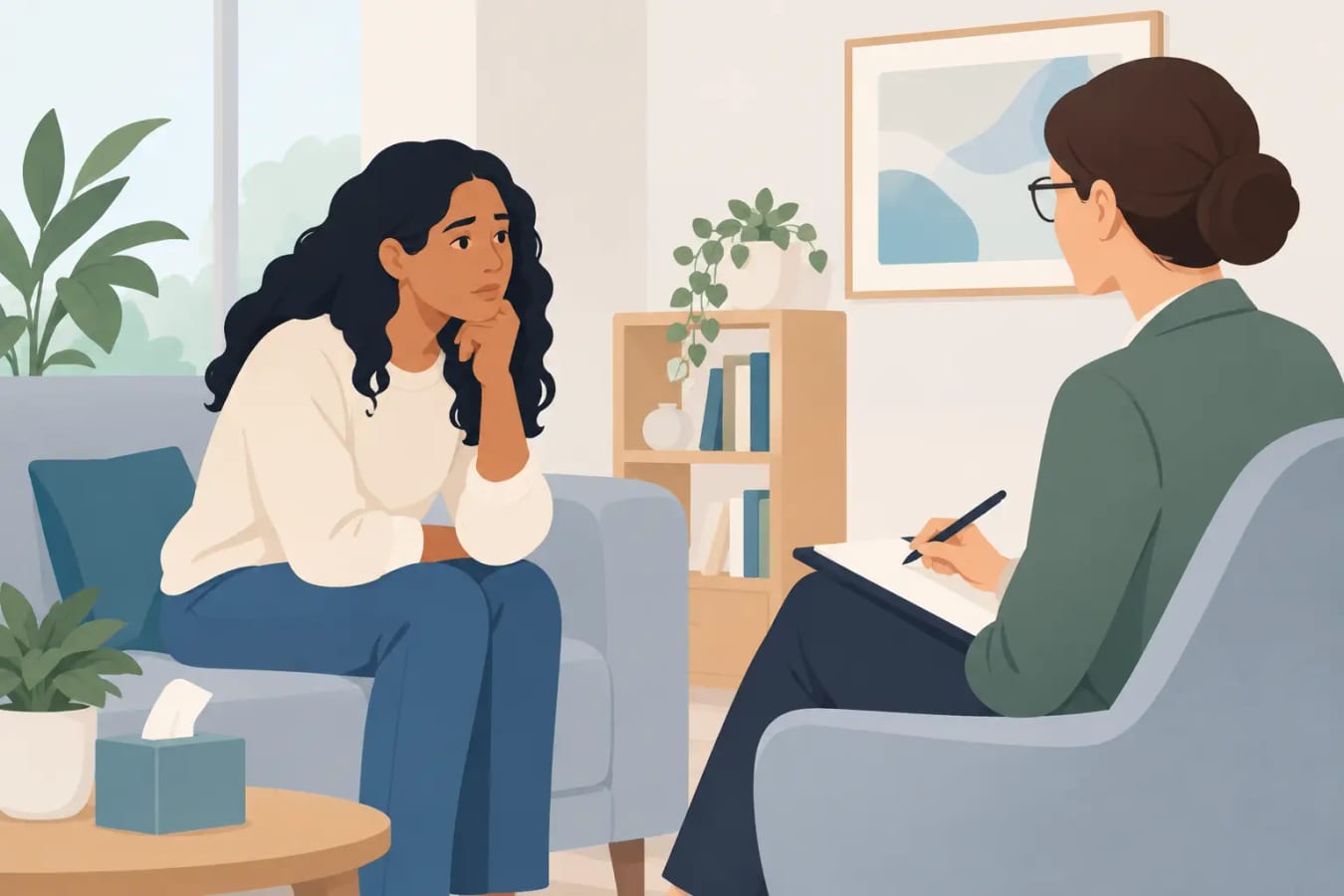
A lot of people worry that they will sit down and immediately have to explain their entire life story in one polished speech. That is rarely how it works. Most first sessions are more conversational than people expect.
You may talk about what has been weighing on you, how long it has been going on, and what kind of support you are hoping to find. Your therapist may ask about your relationships, background, coping habits, health history, or previous counseling experiences. The purpose is not to judge you or label you too quickly. It is to begin understanding your world.
It is normal to feel relieved, emotional, awkward, hopeful, or all of those at once. Starting counseling can bring up vulnerability. It can also bring a real sense of exhale. Many people leave a first session feeling lighter simply because they said things out loud in a space where they did not have to defend, minimize, or explain away their pain.
How to tell if a therapist is the right fit
Fit is not the same as instant comfort. Therapy can be uncomfortable at times because growth is uncomfortable. But there is a difference between feeling challenged and feeling unsafe.
A good fit often feels like being respected, heard, and gently guided. Your therapist should not make you feel dismissed, stereotyped, pressured, or invisible. They should be able to hold complexity. If part of you wants change and another part feels scared, both parts deserve room in the conversation.
It is also okay if the first therapist you contact is not the right match. That does not mean counseling is not for you. It means the relationship matters. Sometimes finding the right therapist takes more than one try, and that is a valid part of the process.
In-person or online counseling?
This is one of the biggest practical questions people face. In-person counseling offers a dedicated physical space away from daily distractions. For some clients, that separation helps them settle in and speak more freely. The routine of going to an office can also create a stronger sense of commitment.
Online counseling can remove barriers that might otherwise delay care. It can be easier to fit into a busy schedule, more manageable for those with transportation issues, and more comfortable for people who feel safer starting from home. The trade-off is that privacy, internet stability, and home distractions can affect the experience.
If both options are available, you do not always have to choose once and for all. Some clients prefer a flexible approach depending on season of life, work demands, or emotional needs. Practices like Counseling Group of the Ozarks recognize that accessibility is part of care, not separate from it.
You do not need to be at your worst to begin
One of the most common reasons people delay therapy is the belief that they are not struggling enough yet. They tell themselves other people have it worse, or that they should be able to handle it on their own. That kind of self-dismissal can keep pain going much longer than necessary.
Counseling is not only for emergencies. It is for those moments when something in your life keeps hurting, repeating, or draining you and you are ready for support. It is for learning new ways to respond to old wounds. It is for understanding yourself with more honesty and less shame.
If you have been searching individual counseling near me, there is a good chance some part of you already knows you need a place to land. You do not have to earn that care by waiting until everything falls apart. Reaching out can be one of the clearest ways to honor your own dignity.
The right therapist will not expect you to arrive with perfect words or a polished plan. They will simply meet you where you are, and sometimes that is exactly where healing begins.