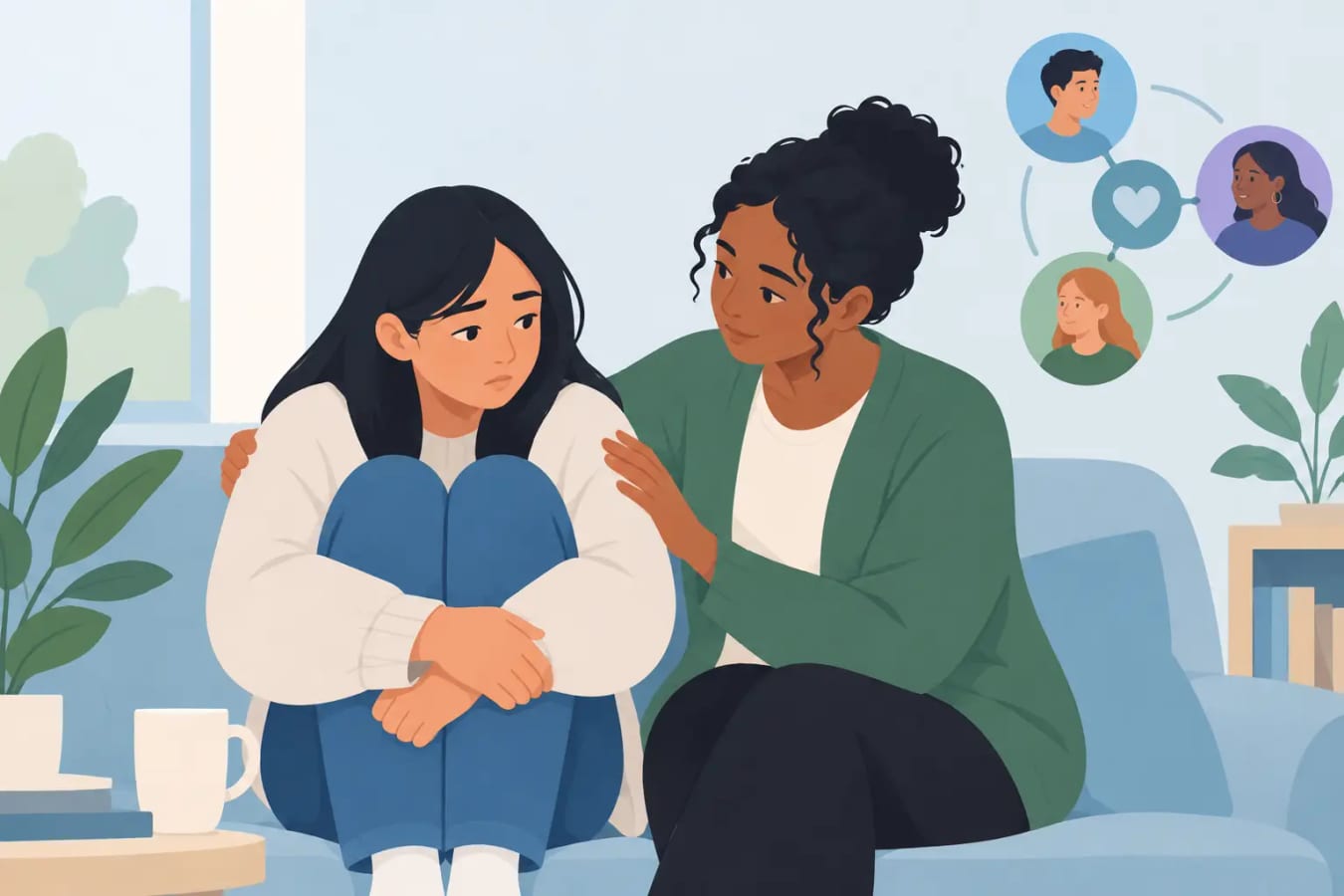
Emotional health
What Grief Counseling After Major Loss Can Offer
Published 5 min read

By the CGO Clinical Team
Licensed counselors and social workers in Springfield, MO · Meet the team
A major loss can change the shape of an ordinary day. A song in the grocery store, an unanswered text, or the empty chair at dinner can bring the reality back without warning. Grief counseling after major loss offers a place to bring those moments without having to explain why you are still hurting, why you are angry, or why you do not know what you need yet.

Loss may follow the death of someone you love, but grief can also arise after a divorce, a serious diagnosis, a pregnancy loss, a job loss, a change in ability, estrangement, or a future that suddenly looks different than you expected. Whatever happened, your grief deserves care. You do not have to make it sound smaller so that other people feel more comfortable.
Grief Does Not Follow a Schedule
People often receive unspoken messages about how grief should look. They may hear that they need to stay busy, be strong for their family, accept what happened, or move on after a certain amount of time. These messages can make an already painful experience feel lonely.
In reality, grief is not a straight line. You may feel numb one day and overwhelmed the next. You may miss the person deeply while also feeling relief that a difficult period has ended. You may be furious, exhausted, distracted, anxious, or unexpectedly calm. None of these reactions means you loved less or are grieving incorrectly.
The intensity of grief also depends on many factors. Your relationship with the person or situation, the circumstances of the loss, your previous experiences, your cultural and spiritual beliefs, and the support around you can all affect how you cope. A sudden loss may bring shock and unanswered questions. A long illness may bring anticipatory grief, caregiving fatigue, and complicated feelings after death. There is room in counseling for all of it.
What Grief Counseling After Major Loss Looks Like
Counseling is not about pushing you to “get over” a loss. It is a collaborative space where you can tell the truth about what has changed and begin finding ways to live with that change.
At first, that may mean having a private place to talk about the person you lost or the life you imagined. You might share memories, regrets, fears, dreams, anger, or the things you cannot say to family members because you do not want to burden them. A counselor listens without asking you to perform wellness or offer a neat ending.
Over time, grief counseling may help you understand the ways loss is affecting your sleep, concentration, relationships, work, health, or sense of identity. Together, you and your counselor can identify practical supports for hard days while making room for the emotional work that cannot be rushed.
Some people want to focus on immediate survival: getting through anniversaries, returning to work, managing family conflict, or handling a loved one’s belongings. Others need space to process trauma connected to the loss, especially after an accident, suicide, violence, or a medical emergency. The pace and focus should reflect your needs, not a timeline imposed from outside.
Counseling Can Help With the Parts Others Do Not See
Grief is often more than sadness. It can affect your confidence, your ability to make decisions, and your sense of safety in the world. You may wonder who you are without a partner, parent, child, friend, role, or familiar future.
A counselor can help you make sense of these changes without reducing your experience to a diagnosis. Therapy may include learning grounding skills for waves of anxiety, setting boundaries with people who offer unhelpful advice, and finding language for needs that are difficult to name. It may also involve exploring how to stay connected to a loved one through memories, traditions, values, or meaningful rituals.
That connection is not the same as staying stuck. Many grieving people fear that feeling better would mean leaving someone behind. Counseling can make room for a different possibility: carrying love and remembrance forward while allowing your own life to continue.
When It May Be Time to Reach Out
There is no requirement to wait until grief becomes unbearable before seeking support. Some people begin counseling soon after a loss. Others reach out months or years later, when life becomes quieter and the pain they set aside starts asking for attention.
It may help to speak with a counselor if you feel persistently isolated, hopeless, unable to function in daily life, or disconnected from yourself and the people around you. Support can also be valuable when grief is creating ongoing conflict in your family or relationship, when you are relying on alcohol or other substances to get through the day, or when memories of the loss feel intrusive and frightening.
If you are having thoughts of harming yourself or feel unable to stay safe, seek immediate support. Call or text 988 in the United States to reach the Suicide & Crisis Lifeline, call 911, or go to the nearest emergency room. You deserve help in that moment, not judgment.
Choosing a Counselor Who Feels Safe
The relationship with your counselor matters. Grief asks you to be vulnerable, and you deserve a provider who treats your story with care and respects your background, beliefs, identity, and relationships.
You might ask a prospective counselor whether they have experience with grief, traumatic loss, family loss, or the particular circumstances you are facing. You can also ask what sessions are like, how they approach goals in grief work, and whether they offer in-office or online appointments. The right fit does not mean every session will feel easy. It means you feel heard, respected, and able to be honest.
For some people, individual counseling is the best place to begin. For others, group counseling can reduce isolation by connecting them with people who understand the confusing and contradictory nature of grief. Family counseling may be helpful when relatives are grieving differently and need support communicating with one another. There is no single right path.
At Counseling Group of the Ozarks, grief support is grounded in the belief that each person deserves dignity, emotional safety, and care that honors who they are. For clients in Springfield, Missouri, and those who can access telehealth services, counseling can offer a flexible way to receive support when leaving home or managing a full schedule feels difficult.
You Do Not Have to Make Grief Meaningful Right Away
After a major loss, people sometimes feel pressure to find a lesson, a silver lining, or a purpose in what happened. Meaning may come later, or it may not come in the form others expect. You do not owe anyone a grateful perspective on something that hurts.
For now, it may be enough to name what you miss, take care of your body in small ways, and let someone sit with you in the truth of what happened. Reaching for grief counseling is not a sign that you are failing to cope. It is a courageous way of saying that your loss matters, your wellbeing matters, and you do not have to carry this alone.