Emotional health
8 Best Ways to Manage Anxiety When It Feels Like Too Much
Published 5 min read

By the CGO Clinical Team
Licensed counselors and social workers in Springfield, MO · Meet the team
Anxiety can make an ordinary day feel like a series of alarms. Your thoughts may race ahead to everything that could go wrong, your body may feel tense or restless, and even small decisions can take more energy than they should. The best ways to manage anxiety are not about forcing yourself to “calm down.” They are about understanding what your nervous system needs, building supportive habits, and getting help when anxiety is taking up too much space in your life.
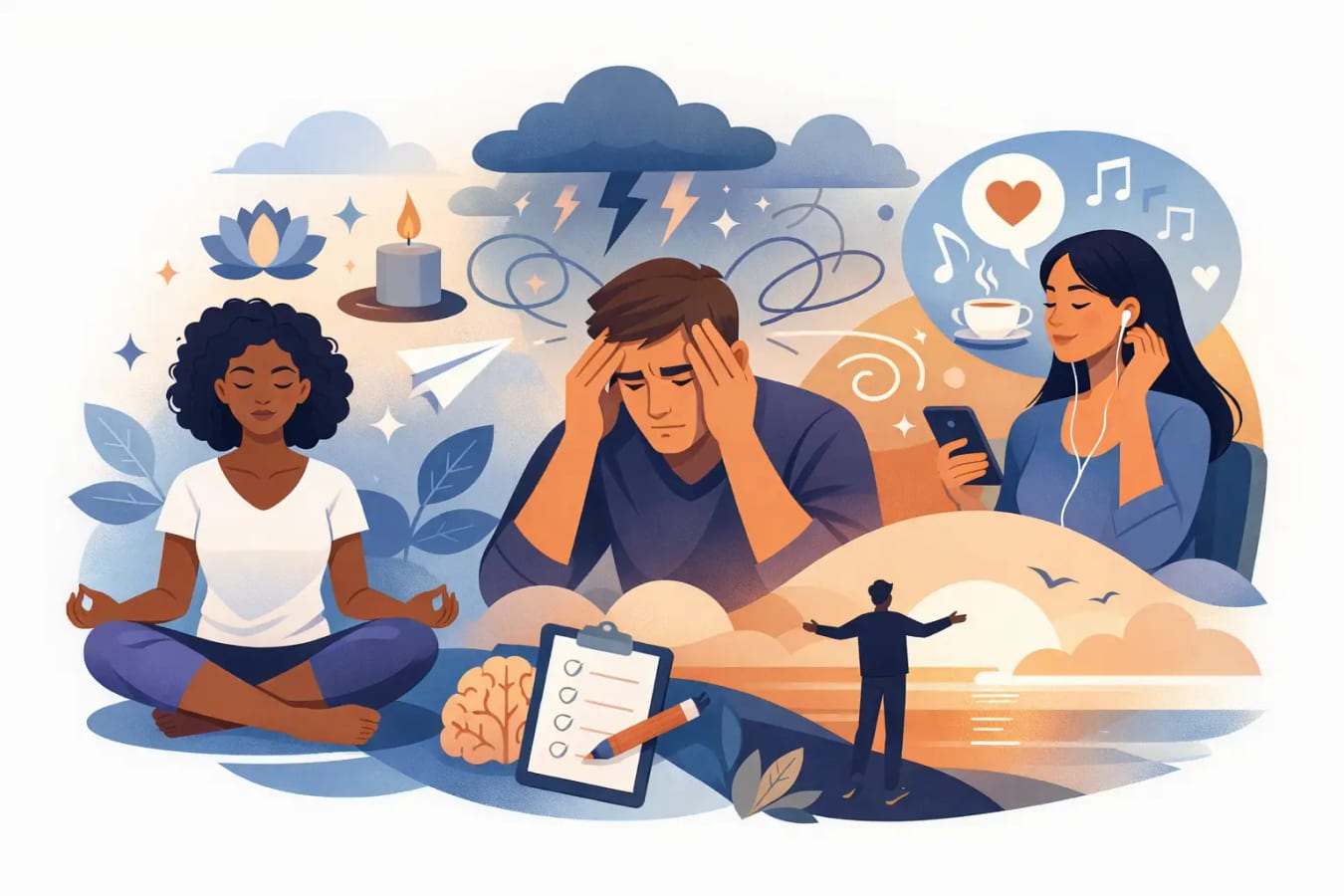
What helps will look different from person to person. A strategy that works well during a stressful workday may not be enough during a panic attack, grief, a major life transition, or ongoing relationship stress. You deserve room to find approaches that fit your life, values, identity, and goals.
Best Ways to Manage Anxiety in Daily Life
1. Start by naming what is happening
Anxiety often becomes more frightening when it feels mysterious. Try putting simple words to your experience: “I am noticing anxiety,” “My body is in high alert,” or “I am worried about an outcome I cannot control.” Naming the feeling does not make it disappear, but it can create a little distance between you and the fear.
It may also help to notice the pattern. Ask yourself what happened before the anxiety rose, what thoughts showed up, and how your body responded. You are not looking for a perfect explanation or blaming yourself for being anxious. You are gathering information with compassion. Over time, this can help you recognize triggers and choose support earlier.
2. Bring your attention back to the present
Anxiety pulls attention toward the future. Grounding practices gently bring it back to what is real and available right now. Look around and identify a few things you can see, hear, and feel. Press your feet into the floor. Hold a cool glass of water. Describe an object nearby in detail.
Slow breathing can help, too, especially when you make the exhale slightly longer than the inhale. For example, breathe in comfortably, then let your breath out slowly. The goal is not to breathe perfectly or eliminate every anxious thought. It is to give your body a signal that the immediate moment may be safer than anxiety is suggesting.
3. Make your next step smaller
When anxiety is high, the whole day can feel impossible. Rather than asking, “How do I fix everything?” ask, “What is the next kind, practical step?” That might mean replying to one email, taking a shower, eating something nourishing, or stepping outside for five minutes.
Small actions matter because anxiety often encourages avoidance. Avoiding a task can bring quick relief, but it may make the task feel bigger and more threatening later. A manageable step helps you rebuild trust in your ability to move through discomfort without demanding that you feel ready first.
4. Support the body without treating it like a project
Your body and mind are connected. Regular meals, water, movement, and rest can make anxiety more manageable, even though they are not cures. A short walk, stretching between meetings, or moving to music in your kitchen can release some of the physical tension that anxiety creates.
Consider your relationship with caffeine, alcohol, nicotine, and other substances as well. Some people notice that caffeine intensifies a racing heart or worried thoughts. Alcohol may temporarily numb distress but can leave anxiety worse afterward. Changes do not need to be all-or-nothing. Paying attention to your own patterns is a useful first step.
5. Give worry a place to go
Trying never to think about what worries you can make those thoughts louder. Instead, set aside a brief, intentional time to write down your fears. Include what you are worried about, what is within your control, and one action you could take if action is needed.
Then, when worry intrudes later, you can remind yourself that you have time set aside to return to it. This does not work instantly for everyone, and some concerns need real problem-solving rather than reassurance. Still, separating a solvable problem from an endless loop of “what if” questions can be a meaningful relief.
6. Practice responding to your thoughts, not obeying them
Anxious thoughts can sound convincing: “I will fail,” “They are upset with me,” or “I cannot handle this.” Rather than arguing with every thought, try responding with a more balanced question. What evidence supports this fear? What evidence does not? Is there another possible explanation?
You might also say, “I am having the thought that I cannot handle this.” That small shift recognizes the thought without turning it into a fact. The aim is not forced positivity. It is making room for uncertainty while remembering that anxious predictions are not guarantees.
7. Stay connected to safe people
Anxiety often tells people to withdraw, cancel plans, or carry everything alone. Reaching out to someone you trust can interrupt that isolation. You do not need to explain every detail. A simple message such as, “I am having a hard day and could use some company,” is enough.
Choose people who can listen without minimizing what you feel or rushing to solve it. Support may come from a friend, family member, partner, faith community, support group, or counselor. For adolescents, a trusted adult can be an especially important part of building a plan for difficult moments.
8. Consider therapy when anxiety keeps shrinking your life
Therapy is not only for a crisis. It can be a place to understand why anxiety is showing up, learn skills that are tailored to you, and practice facing what fear has made difficult. A counselor can help you work with panic, social anxiety, trauma-related anxiety, health worries, relationship stress, or the exhausting pressure to hold everything together.
Different approaches can help in different situations. Cognitive behavioral strategies may help you examine anxious thinking and avoidance patterns. Mindfulness-based work can strengthen your ability to stay present. Exposure-based therapy, guided carefully by a trained clinician, can help some people gradually face feared situations rather than letting anxiety set the limits of their life. The right approach depends on your history, needs, and sense of safety.
For people in Springfield, Missouri, in-office counseling may offer a welcome dedicated space away from daily demands. Online counseling can also make support more accessible when transportation, schedules, caregiving, or distance are barriers. What matters most is finding care where you are treated as a whole person, not as a problem to be fixed.
When Anxiety Needs More Immediate Support
Anxiety deserves attention when it is persistent, worsening, disrupting sleep, affecting work or school, straining relationships, or leading you to avoid places and experiences that matter to you. Physical symptoms such as chest pain, severe shortness of breath, dizziness, or a new racing heartbeat should also be discussed with a medical professional, since health conditions can sometimes overlap with anxiety symptoms.
If you are thinking about harming yourself, feel unable to stay safe, or are in immediate danger, call or text 988 in the United States for the Suicide & Crisis Lifeline, call 911, or go to the nearest emergency room. Reaching for urgent help is a protective act, not a failure.
You do not have to earn support by reaching a breaking point. Anxiety may be part of your story right now, but it does not have to make every decision for you. One small grounding moment, one honest conversation, or one appointment can be a courageous beginning.