Affirming care
Finding an Affirming Therapist for LGBTQ Adults
Published 6 min read

By the CGO Clinical Team
Licensed counselors and social workers in Springfield, MO · Meet the team
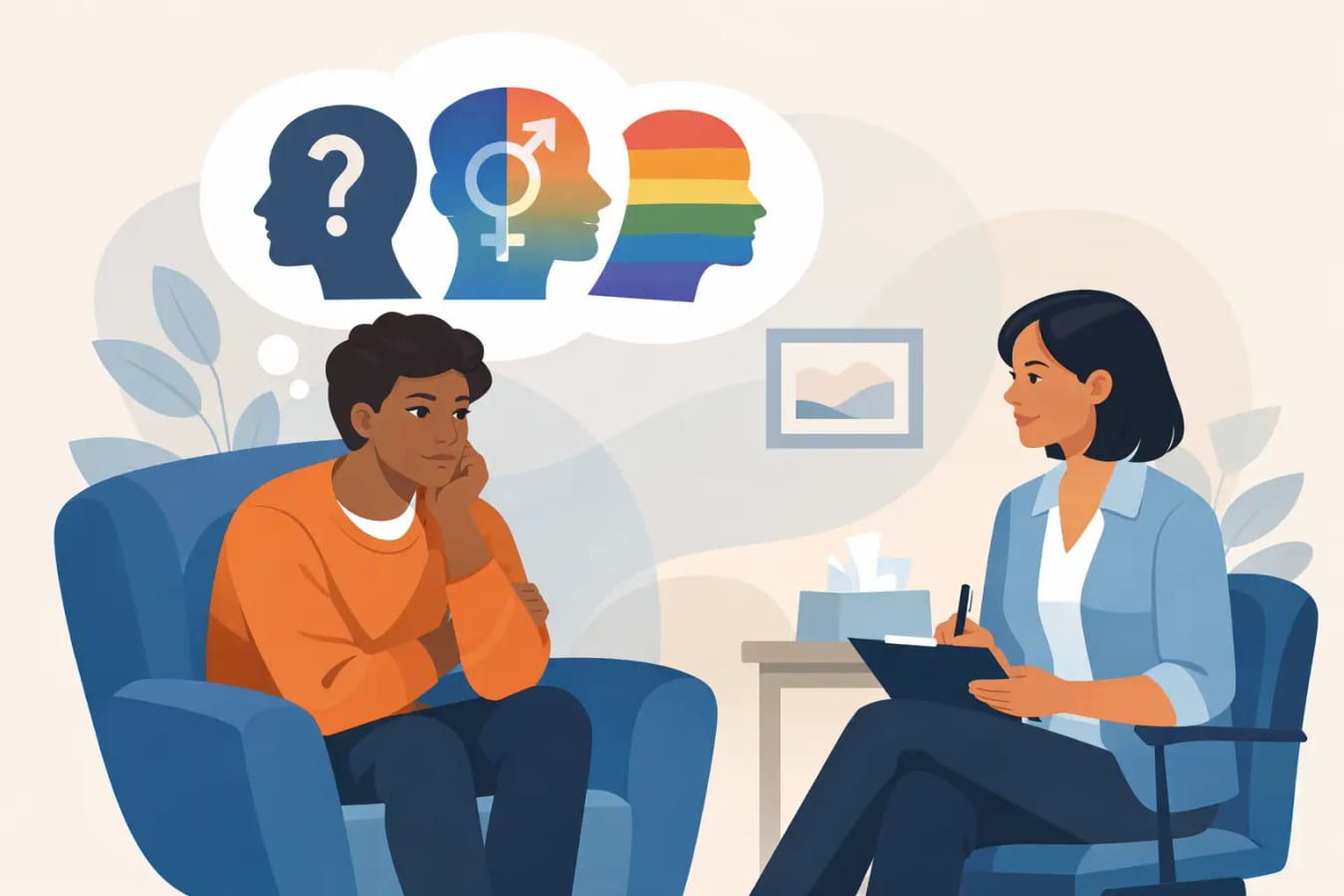
Starting therapy can feel vulnerable enough without having to wonder whether you will need to explain, defend, or soften who you are. If you are looking for an affirming therapist for LGBTQ adults, you are not asking for something extra. You are asking for care that is respectful, clinically sound, and grounded in your full humanity.

For many LGBTQ adults, stress does not come only from anxiety, depression, relationship strain, grief, or trauma. It can also come from being misunderstood in health care settings, carrying the weight of family rejection, managing identity-related fear, or feeling pressure to educate others while trying to get help. Good therapy makes room for all of that. It does not reduce you to your identity, and it does not ignore the role identity can play in your mental health.
What an affirming therapist for LGBTQ adults actually means
An affirming therapist for LGBTQ adults is not simply someone who says they are accepting. Affirming care goes further. It means your therapist recognizes that sexual orientation and gender identity are normal parts of human experience, and that distress often comes from stigma, discrimination, isolation, or chronic stress rather than from being LGBTQ itself.
That difference matters. A therapist can be polite and still miss the mark. They may avoid saying anything offensive, yet still make assumptions about your relationships, use language that does not fit you, or overlook the impact of minority stress on your daily life. Affirming therapy is active. It involves curiosity without intrusion, respect without hesitation, and clinical skill that includes the realities LGBTQ adults often face.
In practice, affirming care may look like a therapist who asks your pronouns and uses them consistently, does not assume the gender of your partner, understands that coming out is not a one-time event, and knows that safety, family dynamics, faith background, and community support can all shape your experience in different ways.
What therapy should feel like
Therapy does not have to feel perfect right away. It is normal to be nervous, guarded, or unsure in the beginning. But even early on, there should be signs that you are in a space where you can exhale.
You should feel respected. You should not feel like a debate topic, a curiosity, or a problem to solve. If you share something important about your identity, your therapist should respond with steadiness rather than discomfort. If they make a mistake, they should take responsibility and repair it rather than become defensive.
An affirming therapeutic relationship often feels both safe and honest. Safety matters, but so does substance. The goal is not just to make you feel welcomed for an hour. The goal is to help you understand your patterns, heal from pain, strengthen relationships, and build a life that feels more like your own.
Why LGBTQ-affirming care can make a real difference
Many LGBTQ adults have spent years adapting to environments that did not feel fully safe. Sometimes that adaptation looks like people-pleasing, hypervigilance, emotional shutdown, perfectionism, or difficulty trusting others. Those responses can make sense in context. Therapy can help you understand them with compassion instead of shame.
Affirming care can also be important because identity-related stress rarely stays in one lane. It can affect sleep, concentration, self-worth, dating, marriage, parenting, work, faith, and physical health. A therapist who understands those layers can often get to the heart of what is happening more quickly and with more care.
That said, not every LGBTQ adult wants therapy focused heavily on identity. Sometimes you want help for panic attacks, burnout, grief, or a painful breakup, and you do not want every conversation routed through a single lens. That is reasonable. An affirming therapist should be able to hold both truths: your identity matters, and it is not the only thing about you that matters.
How to tell whether a therapist is truly affirming
A website can offer clues, but the real answer often comes from how a therapist speaks, asks questions, and responds in the first session or consultation. Look for language that reflects inclusion without sounding performative. Look for signs that the practice sees people as individuals rather than categories.
You can also pay attention to whether the therapist seems comfortable discussing LGBTQ concerns without making them the center of everything. For example, if you mention your partner, do they respond naturally? If you talk about family tension related to identity, do they understand the emotional complexity? If faith, culture, or community are part of your story, do they make room for those realities rather than forcing a simple narrative?
It is okay to ask direct questions before scheduling. You might ask about their experience working with LGBTQ adults, how they approach identity-related stress, or whether they have supported clients navigating coming out, gender exploration, relationship concerns, or family rejection. Their response should feel grounded, respectful, and clear.
Red flags to take seriously
Sometimes people stay with a therapist too long because they want to be fair, or because starting over feels exhausting. That hesitation is understandable. Still, a few signs deserve attention.
If a therapist repeatedly misgenders you, minimizes discrimination, treats your identity as confusion to be fixed, or suggests that your distress would disappear if you changed who you are, that is not affirming care. If they seem uncomfortable with same-sex relationships, trans experiences, or nontraditional family structures, that discomfort can shape the room even if they never say it directly.
There are also more subtle red flags. A therapist who overfocuses on your identity when it is not relevant can be just as unhelpful as one who ignores it. So can a therapist who expects you to teach them basic concepts while you are in the middle of your own pain.
You do not need a dramatic reason to seek a better fit. Feeling unseen is reason enough.
What to ask in a first call or first session
If you are not sure where to begin, keep it simple. You do not need to interview a therapist perfectly. A few honest questions can tell you a lot.
You might ask how they support LGBTQ adults, whether they have experience with identity-related stress or trauma, and how they handle situations when a client has been hurt or invalidated in previous counseling. You can also ask what therapy with them typically feels like. Some people want gentle pacing. Others want more direct feedback. Neither preference is wrong.
It can also help to notice your body during the conversation. Do you feel more tense, more guarded, or more confused afterward? Or do you feel a little more settled, even if you are still nervous? Fit is not only about credentials. It is also about whether the relationship feels possible.
In-person or online therapy
For some LGBTQ adults, online therapy expands access in a meaningful way. It may make it easier to find an affirming therapist, especially if local options feel limited. It can also offer privacy and convenience, which matter when your schedule is full or your community feels small.
At the same time, telehealth is not automatically better for everyone. Some people feel more connected in person. Others need a private space at home and may not have one. The right format depends on your comfort, access, and what helps you feel most present. In Missouri, for example, some clients appreciate having both in-office and online options because flexibility can lower the barrier to getting started.
You are allowed to want more than basic acceptance
A lot of people have been taught to settle for being tolerated. Therapy should ask more of the relationship than that. You deserve a space where your identity is not a side issue, not a liability, and not something you have to shrink to make others comfortable.
The right therapist will not expect you to have the perfect words for what you are feeling. They will help you find them. They will not rush your story or decide what healing should look like for you. They will work with care, humility, and respect for the life you are actually living.
At Counseling Group of the Ozarks, that kind of care begins with the belief that every person deserves dignity, safety, and support that honors who they are.
If you are searching for an affirming therapist for LGBTQ adults, trust the part of you that wants to be met with respect. Therapy can be a place where you stop bracing for harm and start making room for relief.